[00:00:03] Speaker A: Welcome to Salon Era, A Salon experience for the 21st century. Salonira is Le Delisa's signature podcast and web series.
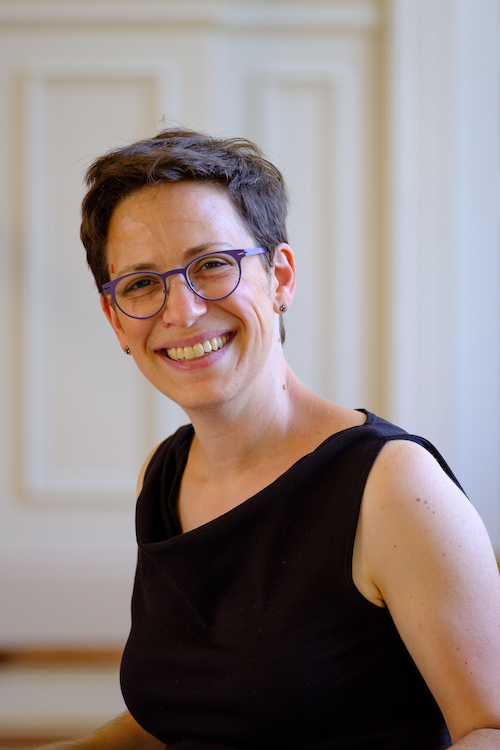
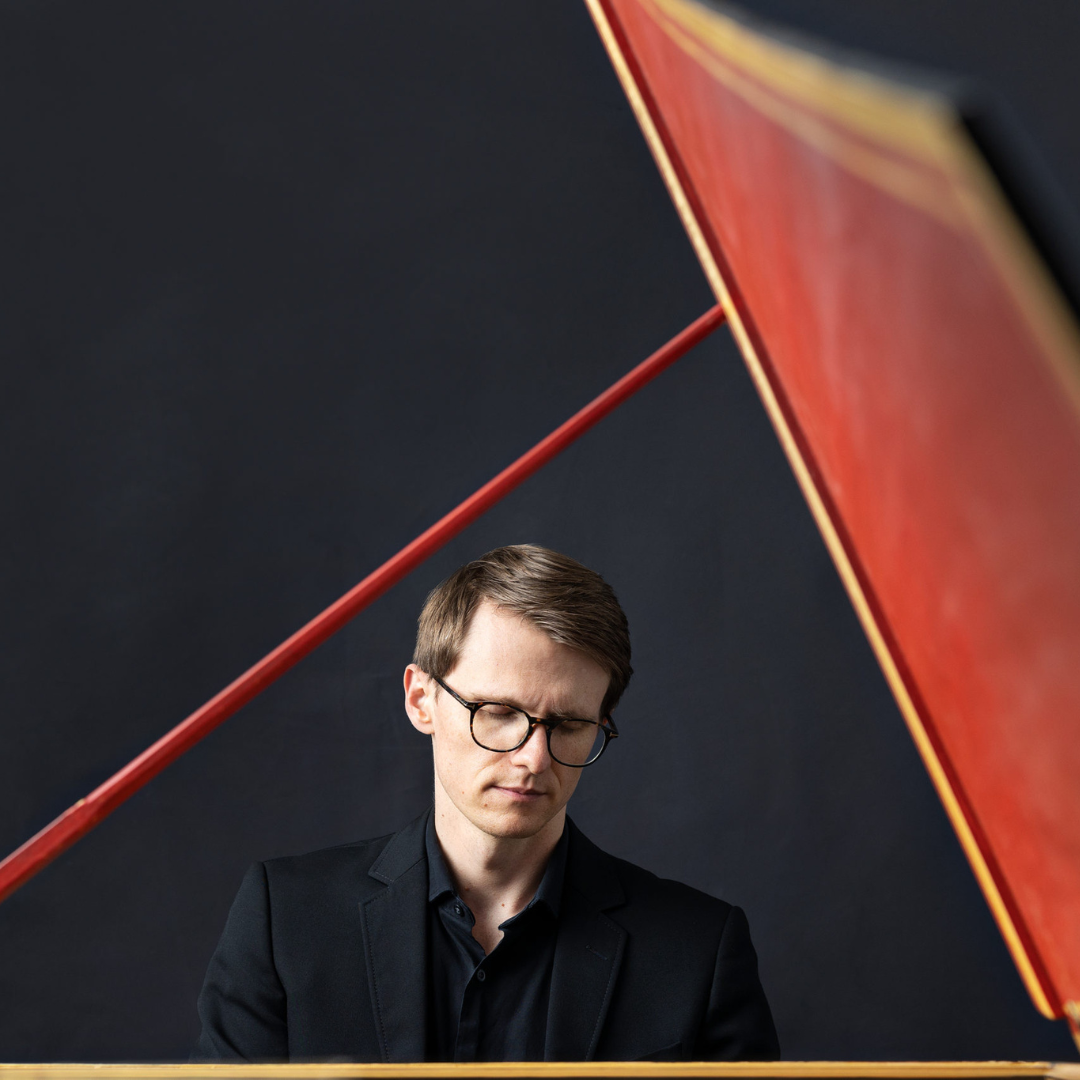
Blending performances, historical deep dives and artistic conversations, Solanira has cultivated a fiercely curious, supportive community of listeners. I'm your host, executive producer Deborah Nagy, and this is our Solanira Spotlight on Bach's and English Suite Number one, featuring harpsichordist Mark Edwards.
Let's dive in.
Hi, Mark. It's great to have you here and welcome you for a special Salon Era spotlight dedicated to the first English Suite by J.S. bach.
First of all, I wanted to ask you, why are they called the English Suites?
[00:00:52] Speaker B: So that's a great question.
The evidence for why they're called English Suites is not particularly great.
We have it on the authority of Forkel, who was one of those early biographers of Bach, that the English Suites were written for some important English nobleman, whatever that might mean. But perhaps more convincingly on a copy of the English Suites that was in the possession of Bach's son, Johann Christian Bach. It says very clearly, faite pour les anglaises, so made for the English. So this is probably where the moniker English Suite comes from.
[00:01:27] Speaker A: Right. And so we're going to be talking about the English Suite Number one. And can you talk us through the structure of that piece and what we can expect?
[00:01:37] Speaker B: Yeah, absolutely. So, like pretty much all suites, all keyboard suites, there are a couple of obligatory movements that are always included. We've always got an allemand, we've always got a courant, we've always got a sarabande, and we've always got a gigue. But that structure is kind of customizable to an extent. And so what Bach gives us is some extra things we hear first a prelude, which is special from that English connection. And I bet we'll get into in a second, followed by the allemande, followed by not one courant, but two courants with several variations on the second courant, followed by the sarabande, followed then by two bourreis in alternation, and then finally at the end the gig.
[00:02:24] Speaker A: Well, let's begin by talking about the prelude to this first English Suite.
[00:02:30] Speaker B: So the story behind this is, if you listen to the theme of the prelude, it's this sort of gently flowing theme. But Bach didn't invent this theme just out of nowhere. He actually borrowed it from a previously published source.
It comes from the gigue of the Suite in A Major by Charles Dieppard.
Charles Dupart was a Frenchman who lived in England and so he composed music that was mostly in French style, but also had some sort of Italian and English influences in it as well.
He published these suites in 1701.
And we know, without a doubt, because we have the copy, that Bach copied the Suites of Dieppart for his own study and his own playing. So this was music that Bach knew. And so it cannot be an accident that that theme of dieparagigues appears right at the beginning of the prelude of the First English Suite.
[00:03:44] Speaker A: Well, let's take a moment now and listen to that full prelude from Bach's First Suite in A Minor.
Well, Mark, you mentioned a moment ago, there's the one manuscript source in the possession of J.C. bach that has the English moniker or tribute to it. I was wondering, were the English suites ever published in Bach's lifetime, or did they only exist in manuscript?
[00:06:55] Speaker B: Like a lot of Bach's keyboard music, the English suites were certainly never published during Bach's lifetime.
So what we have is a wide variety of manuscript sources for these pieces.
We do know that their origins, perhaps not their final form, but at least the beginnings of these pieces go back to Bach's time and Weimar, because we have a very sort of early version of the Suite in A Major from Weimar.
But then after that, many of the sources are much, much later.
There's a particularly good source, probably from the 1720s in Leipzig, copied by Bach's student Gerber, under his supervision, the J.C. bach copy, a later copy also by Agricola. And what's fascinating about all of them is that, of course, there's a wide number of discrepancies between them with exactly
[00:07:53] Speaker A: what
[00:07:53] Speaker B: notes you're playing, and then beyond that, especially what kinds of ornaments are added.
So I think they're a lot of fun to deal with as a performer, because you don't necessarily have one sort of authoritative text that represents exactly how Bach was thinking about it at a particular time. It's something that you have to creatively reconstruct for yourself as a performer.
[00:08:17] Speaker A: Interesting. So there are a variety of potential readings of this score, and yet I can imagine that a lot of folks are basically learning from one source as though that were the text.
So what might performers consider when choosing an edition?
[00:08:34] Speaker B: That's a great question nowadays. The great thing is that consulting any of these sources, if you wish to do so, is trivial because there are scans of nearly all of them that you can just look at online.
But beyond that, I think if you want to get a feeling for the kind of flavor of the variety of ornamentation that's possible in these pieces, then? Actually, just comparing the two leading Urtext editions, the Baronreiter Neue Bachausgabe and the Henle edition, gets you quite a long way, because, of course, both of those editions are trying to reconstruct whatever they consider as a kind of best text, which means that they arrive at very, very, very different decisions.
So if you play the pieces from both editions and kind of live in the difference between them, you get a good feeling for it.
[00:09:31] Speaker A: Well, as you mentioned, another remarkable feature of the first English suite is the fact that there are two courants, and one of those. The second one of those courants has multiple doubles.
First of all, can you tell us what characterizes a courant?
[00:09:50] Speaker B: So the sort of textbook answer to this is that there are, of course, two kinds of courant. There's the French courant and the Italian courante.
This is very much a French courant, which means it's quite a sort of noble dance in three, two, time, which is quite important because the other important feature of most courants composed by German composers in French style is that they play a lot with himiola, which is the kind of reorganization of triple meter to create different patterns of accentuation. The courant also, in my mind, I think, kind of represents the height of French sort of majesty and splendor from the past, given that the courant was also one of the sort of primary courtly dances in the 17th century. By the time we get to the 18th century, no one is dancing the courant anymore. It's much more stylized, but it kind of evokes that period in French history.
[00:11:02] Speaker A: Speaking of things that are stylized, can you define for us a double?
[00:11:10] Speaker B: So this was a very, very popular French practice. The idea was, if you have a dance movement like an allemande or a courant or whatever, it usually proceeds along in one basic note value. So composers wanted a way of providing a kind of variant or an ornamented version of the same piece by producing diminutions of the basic note value in the piece, that is, making note values that are smaller than that basic note value.
So that would mean that if quarter notes are the basic value, then maybe the double proceeds primarily in eighth notes. And so you have a piece that has a much faster and more elaborate surface texture because of all of that activity. But it's fundamentally the same piece at its core. It's usually the same harmony. It's usually the same sort of melodic outline. The fact that Bach offers with his second courant not just one, but two doubles. It's almost like he's giving a little sort of mini encyclopedia of ornamental possibilities for this particular courant. And it's also, I think, a very beautiful point of connection with the Frenchness of this piece.
[00:12:31] Speaker A: Absolutely. Well, let's take a moment and we'll listen to the beginning or the A section of the second courant.
So, Mark, having heard the beginning of the second courant, how does Bach treat this melody and this harmonic structure in the first double?
[00:13:25] Speaker B: So I think what we hear in the first stuble is that Bach is mainly providing a lot of rhythmic activity in the left hand, but it's an interesting kind of rhythmic activity because it's not moving constantly at one particular speed, but more sort of moving in fits and starts. So you have all of these little flourishing scales down in the left hand and then something a little bit more neutral.
[00:14:20] Speaker A: And how is the second double of this second courbrant different? Or how does Bach treat this melody and harmonic structure in the second double?
[00:14:31] Speaker B: This one to me feels a little bit more classically double, like somehow, because basically he's mainly ornamented the left hand and he's basically turned it into a walking base in eighth notes. And so you have this nearly constant eighth note motion running through the entire piece from beginning to end.
[00:15:20] Speaker A: Thanks so much for listening to Solanira. Solanira is a production of Les Dees made possible by donations from viewers and listeners. Like you.
We rely on the generous contributions of listeners and fans to cover artist fees and production expenses as well as support the hours of research and planning that go into each program.
Now in our seventh season, Salanira offers two different episode formats.
Salanira spotlights are bite sized 10 to 15 minute audio and video episodes that highlight a specific piece or topic.
Hannah DePriest hosts our salon Era Audio exclusive, which are hour long audio podcast episodes that sample recent Les Delices live performances as we hear from multiple guests.
Solaniro Spotlights and Audio Exclusives are available on all major podcast platforms, YouTube and directly via the Solaniro website where you can also find guest biographies and episode specific resources or make a tax deductible donation to support production.
Thanks again for listening to this episode of Solanira. If you love Solanira's unique combination of performance and conversation, we hope you'll subscribe to the Essie Podcast to hear more from Solanira and Les Delys or consider making a donation or signing up for our mailing
[email protected] thanks for your support.
Mark, how does your recent recording of the complete first English suite fit into your larger project to record Bach's complete keyboard works?
[00:17:03] Speaker B: So yes, this project, it's called Viabach and the idea is to provide video recordings of the complete keyboard works of J.S. bach over essentially the next 500 weeks. The project will finish on Bach's 350th birthday in 2035.
So it's a very, very long project. So there are lots more pieces to come.
Next will be lots of the inventions and sinfonias as well as some of the pieces that Bach used when teaching his students.
[00:17:47] Speaker A: Can you tell us about the release structure and also what you've released so far?
[00:17:53] Speaker B: So there is a video that comes out every Wednesday and the videos operate on essentially a two week cycle. So one week I'll release one BWV number and that's how it's organized. One BWV number, one video. And then the following week I'll release a video as a kind of companion piece to that. So it might be a piece where I talk about some of the stylistic issues in the piece or offer a tutorial on how to play certain parts of it. Or sometimes it's a performance of another piece that shines some special light on the piece we just heard by Bach the previous week.
And so yes, if you check out the YouTube channel, you'll see that the complete first book of the well Tempered Clavier is there, several of the English suites are there, and there'll be lots more pieces to come.
[00:18:49] Speaker A: Returning now to the first English Suite, what do you find most interesting or worth talking about that we haven't already addressed?
[00:18:57] Speaker B: So many things to talk about.
It's got totally gorgeous Saraban, but if I had to choose another sort of favorite movement in the suite, it would probably be the bourreis. The bourre is a fairly sort of quick, lively dance. I think it's one of the most joyful, energetic, playful pieces in Bach's English suites.
[00:19:25] Speaker A: Mark, it's been fantastic to talk with you and share your work on Viabach.
The full performance of this first suite is available on your YouTube channel. Thank you for being a part of this Salon Era spotlight, which I'd love to close now by listening to the full performance of the first Bourre from the first English Suite of Bach. Thank you so much for joining us. Mark.
[00:19:50] Speaker B: Thank you so much for having me.
[00:21:52] Speaker C: Thanks so much for listening to this episode of Salon Era.
This episode was created by me, executive producer Deborah Nagy, Associate Producer Shelby yaman, and Hannah DePriest, scriptwriter and special Projects Manager. For this episode, I spoke with harpsichordist Mark Edwards.
Support for Solaniera is provided by
[00:22:12] Speaker A: Cuyahoga Arts and Culture, the Ohio Arts Council, and audience members like you. The music you heard on this program was performed by Mark Edwards, who shared recordings produced for Vie Bach, his YouTube channel that encompasses a 10 year project to record the complete keyboard works of J.S. bach.
Les Delice receives general operating support from the Ohio Arts Council, Cuyahoga Arts and Culture, and the Paul M. Angell Family Foundation. We are also very grateful to our Salon Era season sponsors Jerry Fautauer, Tom and Marilyn McLaughlin, and Drs. Joseph Sapko and Elizabeth McIntyre. Please subscribe and leave a review on whatever platform you're listening on. It really helps the show from all of us, thanks for listening and have a great day.