[00:00:04] Speaker A: Welcome to Salon Era. A Salon experience for the 21st century. Salon era is Les Delisa's signature podcast and web series. Blending performances, historical deep dives and artist conversations, Salanira has cultivated a fiercely curious, supportive community of listeners. This is the second pod exclusive of our seventh season. Three more will drop over the coming months. I am your host, script writer and special projects manager Hannah DePriest and this is Bach's musical offering. Today you'll hear music recorded by Ladalis from this season's opening concert, which was our best attended season opener of all time, by the way. Plus interviews with harpsichordist Mark Edwards, Bach scholar Dr. Reginald Sanders, and Lady Lyse founder and artistic director Deborah Nagy. Before we chat with Mark, just a friendly reminder that you can watch the full concert Bach's musical offering online or right now through the end of November 2026. So visit Lesdelisse VHX TV to get access today.
Okay, well, Mark, it is so great to be talking with you. You've shared your wisdom in several episodes of Solanira, most recently for the spotlight on his first English suite. But today we're talking about Bach's musical offering.
And I just want to remind our listeners that you are doing this incredible long term project of recording all of Bach's keyboard pieces. So I'd love to check in, like, what percent complete are you? Like, how are you feeling about how it's going?
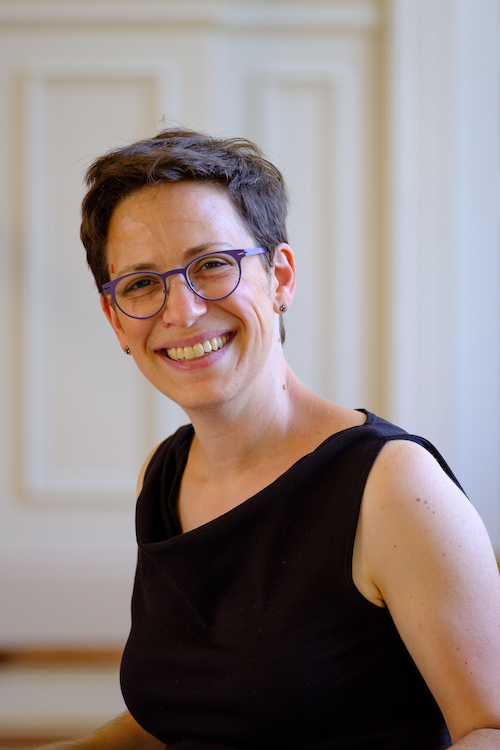
[00:01:36] Speaker B: Oh, yeah, yeah. So the project is called Via Bach and yes, as you said, it's a project of recording the complete keyboard works of Bachelor with video so that, you know, you get a sense of presence and liveness and also that you just get to see the keyboard in terms of percentage completion. I guess if I had to estimate, I'm probably, since I'm about, you know, a year and a bit into the project, I guess I'm only about 10% of the way done.
[00:02:06] Speaker A: Wow. Okay, well, and we also, we should remind people it's videos that are free to stream on YouTube, which is the really amazing aspect of this. So it's Viabach V I A Bach and everyone should go and subscribe. Ladylies is definitely cheering you on and we're also excited to find ways within our seasons to feature you playing Bach.
So this season, of course we did Bach's musical offering to open the season and it's straight streaming right now, the full concert. But we're also of course going to be playing excerpts in this podcast. And then in December, you're playing a harpsichord concerto by Bach. Can you tell us a Little bit about that one.
[00:02:51] Speaker B: I have to say I'm really excited to play this piece. It's a piece that I wanted to learn and play for a long time. It's Bach's Concerto for Harpsichord and Two Recorders because it is effectively an arrangement of Bright Brandenburg 4.
And so what he's done is basically transferred all of the really, really crazy violin solo to the harpsichord.
This was something that Bach was doing a lot in his Leipzig years. He had a series of performances at the Zimmermann Coffee House that almost always involved the harpsichord in a prominent way. And so this is, for me, sort of the crowning achievement of that series of concerti. And it's also, I think, quite rare that I get to find a harpsichord concerto that actually allows me to play with Deborah.
[00:03:44] Speaker A: Yes, that's fabulous. So, Mark, can you tell us the story of how Bach's musical offering came to be?
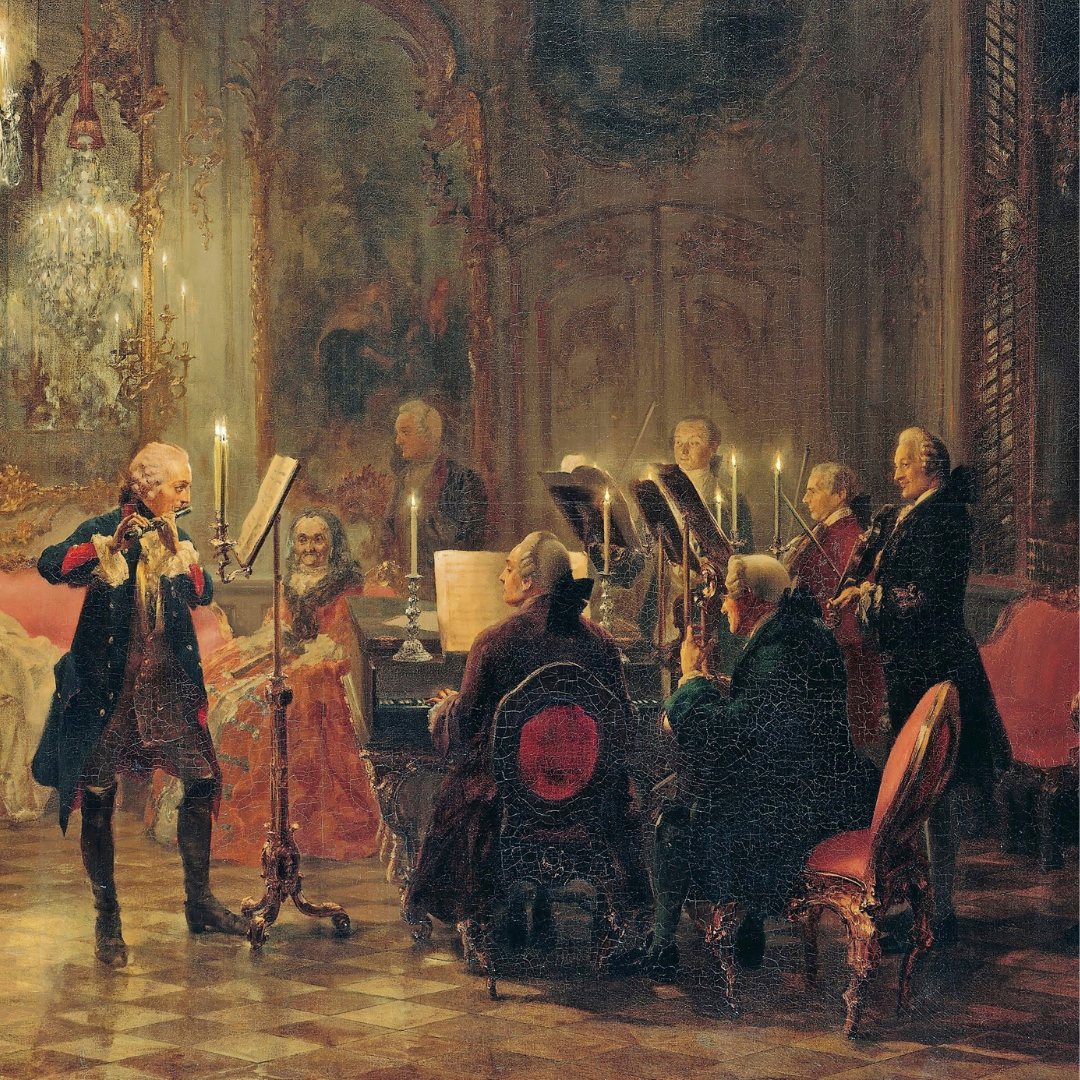
[00:03:52] Speaker B: Sure, yeah. It's a story that's been rehearsed a number of times, but yeah, it has different contours depending on who's telling it, I guess. So the story roughly is that Bach is in Potsdam visiting his son, Karl Philipp Emanuel Bach, who is in the employ of the famous King Frederick the Great.
Bach has arrived and he's resting comfortably in his son's apartment. And at the same time, Frederick the Great is preparing for his nightly concert. Frederick, as we know, was a.
A wonderful flute virtuoso and he loved playing concerts for his courtiers and subjects. In any case, he's preparing to start this concert and he receives word that the elder Bach has arrived in town. He stops the concert instantly and demands that Bach be summoned to court so that he can meet him in person.
Bach, of course, the elder Bach dutifully does this.
And arriving at court, he's taken around and shown some of the King's relatively newly acquired forte pianos. This is a period when the forte piano was still a relatively new instrument and the King had several by Silbermann. Bach tried them, of course, but the King wanted also to set a particular challenge to Bach. So he presented Bach with what's now known as the royal theme, which is the theme upon which all of the musical offering is based.
He presented it to Bach and said, okay, I'd like you to improvise for me a three voice fugue on this theme, which Bach apparently did with great aplomb, to the general astonishment of everyone present.
After finishing this though, Frederick said, well, you know, that was lovely, but could you now do S6 voice fugue on that same theme?
To which Bach demurred and depending on which which source we, we believe he either refused to play at all because it would have been too demanding a task to do on the spot, or he offered instead to improvise a six voice fugue on a theme of his own choosing.
In any case, the evening ended, Bach and Frederick go their separate ways. And really a very short time later, Bach composes and publishes the Musical Offering, which is a collection of pieces all founded on this so called royal theme, including the three voice fugue, now called Richakar, which may or may not represent exactly what Bach improvised.
And the kings asked for a six voice richikar.
And of course these two Richikars are accompanied also by a variety of other pieces, including cannons and importantly for the appreciation of Frederick the Great, a trio sonata, including a very, very prominent part for the traverso that Frederick played so well.
[00:07:12] Speaker A: That was a really great and colorful telling of that story. Is your feeling that Frederick the Great probably didn't write this theme himself? And also, can I, can we just back up for a second and say, like, why was this a challenge for Bach? Like I imagine him improvising a few on for however many voices would not normally be demanding. What is it about the subject that made it a challenge for him?
[00:07:39] Speaker B: Yeah, I, so first of all, I am very doubtful that the theme is by Frederick.
It's extremely chromatic, of course. I mean, that's what makes the whole musical offering feel so sort of complicated, I think, when we're listening to it.
And so the subject itself is in a style that I don't imagine Frederick would really have played very much.
I mean, Frederick loved and appreciated gallant music, which tends to have subjects that are a great deal simpler. So if I had to guess, you know, I could imagine that maybe CP Bach wrote it perhaps.
And as to what makes it difficult to imagine improvising a fugue on such subject, first of all, it's quite long, so you have to retain that whole subject in your head as well as all of its, you know, transformations and transpositions.
And if we're thinking about improvising in six voices, that's also, you know, that's six voices to manage.
I don't know, when I'm improvising, sometimes I feel like I can barely manage two voices at the same time. I mean, this is the, this is the period in Bach's life where he is finally publishing lots of music.
You know, all of Bach's music, his published music dates from near the end of his life and they're mainly keyboard pieces, very sort of highly wrought contrapuntal works like the Art of Fugue that were intended to cement Bach's entry into learned societies of counterpoint.
So I imagine that at this point in Bach's life, there is a little concern with legacy, hence the desire, the need to publish all of these things and to be recognized for his stature as a master of counterpoint.
[00:09:52] Speaker A: And they'll see. They'll all see and like the world that we live in now. I mean, my God, I mean, just hearing, like, listening to you say that, I'm thinking about, like, all of these incredible romantic composers who idolized his mastery of counterpoint. And yes, like, took it in different directions, but, like, very much, he. He did cement his place in this kind of pantheon for exactly that.
[00:10:19] Speaker B: Of course, there are many, many other aspects of Bach's music that frankly, I think end up being more interesting for listeners. I sometimes feel as if the counterpoint is more like a vehicle for the manipulation of emotional states, for the depiction of ideas related to rhetoric or to spirituality, and that the counterpoint is the means by which all of those things are developed.
[00:10:53] Speaker A: Does that feel true even for a work like the Musical Offering?
[00:10:58] Speaker B: Yeah, good question.
Sometimes I feel, yes.
So, for example, in both the three voice and six voice Ruchikars, I think what Bach does with harmony and with changing mood and with surprising listeners by very quickly changing from one idea to the next, that. That to some extent is more important in a certain way than the counterpoint.
[00:11:26] Speaker A: We're actually gonna listen to you playing the Richard Carr A3, which is the first kind of piece in the collection. Can you set the stage for us a little bit more for this first piece that we'll hear?
[00:11:43] Speaker B: Sure.
So like all fugues, the piece begins with the subject entirely unadorned. And so it's a great opportunity. In fact, it's one of the only opportunities in the whole musical offering to hear the subject just by itself. And then as every fugue works, we have the subject reappear in different voices. And then after that, you'll hear that Bach starts introducing other interesting ideas through the piece. You'll hear a very sort of striking arpeggiated gesture that starts in the bass and then. And then zigzags upward.
You'll hear these. These quirky little offbeat rhythms that come sort of halfway through the piece.
And you'll also hear maybe as a. As a kind of preview of what happens in the Trio Sonata. You'll hear a section of very sort of deliberate sobbing, sighing gestures as well, and so Bach integrates all of these different ideas and themes within the structure of a fugitive.
[00:19:15] Speaker A: I'm so excited to be Speaking today to Dr. Reginald Sanders, who is a well known scholar of Bach, both JS Bach and CPE Bach.
Dr. Sanders, to get started, I would really love to hear you your take on the story of Bach's musical offering, the origins of this incredible piece of music.
[00:19:41] Speaker C: Well, I think it was a really great occasion. I wish I could have been there. Right, so Frederick the Great typically enjoyed music every evening from 7 until 9.
And on May 7th in 1747, Bach arrived and he invited Bach in to join in with this, with this assemblage of really great musicians, Right. Bach joined them and apparently improvised on some of his new forte pianos that had been made by Silvermann.
And then the King gave him this, what we know now as the royal theme and asked Bach to improvise on it.
And Bach did a three part reacher car. And apparently people really liked it. I did want to say, I think this was really a high point in Bach's life to meet with somebody who so famous and so powerful.
And also it was a high point in his relationship with the press because the Prussian court then released a press release about this event because Bach's profile compared to people like Telemat our Handel wasn't quite as high. And so this was a real opportunity for him to have more exposure.
It was also interesting in that Bach was perhaps more of a traditionalist and Frederick the Great was a bit more progressive in his musical tastes.
So I don't think there was any friction or anything, but it was a meeting of people with sort of different perspectives on music and on life.
So later then Frederick the Great asked him to improvise a six part fugue, which would have been a really tall order. Most fugues around this time were maybe four or five voices, but rarely like six. And apparently Bach was said he did do a six part fugue, but on a theme of his own devising. And then several months later, maybe two months later, he did actually publish what we know as a musical offering that includes the three part ritual car and the six part Richakar also, which was the King's request.
[00:21:41] Speaker A: This is such an interesting, just imagining this kind of like salon like atmosphere. But the way that you're describing it, there was a distinct kind of competitive edge to, to it perhaps with, with this kind of like, well, can you do this? Can you improvise on the spot? And I just imagining like, oh my, my palms are sweating. Just like imagining doing that.
[00:22:04] Speaker C: Yes. You know, I can't imagine exactly what the atmosphere was like, but I've always just thought of it in a, in a. In a really positive light, that Bach, you know, a really great composer, was meeting somebody, a very powerful person who was very interested in music and very capable as a musician himself. And they got together, as you say, maybe a little give and take in there, but mostly a good occasion. Although after he did have the musical offering published, we're not entirely sure that Frederick the Great was that enamored of it. Right. Like, he didn't necessarily respond. He might have offered Bach like a financial sort of gift. And I think those things didn't happen.
[00:22:45] Speaker A: He'd already moved on. Whereas Bach was. Bach went home and was furiously writing all of these different treatments of the theme.
[00:22:52] Speaker C: Right, right. And some of them in a style that was sort of considered old fashioned by that time. Right. But Bach was the master of that.
[00:23:00] Speaker A: So, as you said, there are these other composers who are more cosmopolitan, maybe more central to the culture than Bach, who had this church appointment in Leipzig from which, of course, he's composing these unbelievable, you know, cantatas and pieces of church music that we still admire and perform regularly today.
But was there a sense during his lifetime that he was maybe kind of on the periphery?
[00:23:29] Speaker C: Well, my impression has been that the great musicians knew him and knew how great he was. His public image was maybe not as large as that of other people. And of course, C.P. bach, once he published a treatise on keyboard playing and so on, his name was maybe bigger, but I've always felt like the talented musicians knew how talented he was because they would look at the music. Right. And just that would speak for itself. Right.
[00:23:53] Speaker A: A friend of mine who's a harpsichordist recently showed me his replica of the original publication. And my first thought was like, oh, my gosh, this is so bizarre. It's all different sizes, papers, and it was beautifully economical and how the different canons were laid out. And it struck me as so funny that it comes to you in a little folder and then it's just all these little papers in all different sizes. What's up with that?
[00:24:18] Speaker C: Well, it appears that maybe Bach wanted to make it possible for people to purchase the sections that they wanted. Right. So it came in these various. In these five fascicles, I think there were five.
And so that reminds us that he may not necessarily have thought of the work as something that should be performed together. Right. Every movement, but that you would, you would, you would buy those sections that you wanted. And then the title page and the preface, they could, they could serve as a wrapper for whichever sections you purchased. Right. And. And this feels sort of right to me when I think about especially the canons, right. Like they're.
They seem to be sort of little individual little gems. Right. And they don't necessarily have to be tied to something else. Just to see how Bach's musical imagination played out with that royal theme. You're engaging with them, right. And letting them reveal to you what they have inside.
[00:25:08] Speaker A: We're about to listen to one of the so called puzzle canons. This one is the two part canon in contrary motion. Can you talk to us a little bit about why they're called puzzle cannons and. And how they're supposed to be worked out?
[00:25:23] Speaker C: All right, well, so they're puzzle cannons because you have to look at them a little bit to know how to perform them. He may not have even indicated exactly where the voices should enter and on which pitches. So you have to sort of sort that out. Well, I tend to think of all of them as being kind of a delight for both the mind and the ear. The oral theme is gonna sort of soar above everything that's happening. But then in addition to the oral theme, we have this line that Bach wrote. And if the second voice engages at a certain point, the point he's indicated, then most of the motion between the two voices is gonna be in contrary motion. And so when we hear this piece, we hear this theme soaring, and then you can, you can also then marvel at the counterpoint that he's created. Right. And so that's kind of an intellectual thing, but then our ears and our emotions sort of engage with it in a way, and we think the result is still quite beautiful music.
[00:28:21] Speaker D: Thanks so much for listening to Salon Era. Salon Era is a production of Les Delys made possible by donations from viewers and listeners like you. We rely on the generous contributions of listeners and fans to cover artist fees and production expenses. Expenses as well as support the hours of research and planning that go into each program.
Now, in our seventh season, we offer two different episode formats. You are currently listening to an audio exclusive. New this year. You can also listen to or watch on YouTube. Salon Era spotlights shorter episodes that highlight a specific piece or topic. Salon Era Spotlights and audio exclusives are available on all major podcast platforms, YouTube and directly via the Salon Era website, where you can also find guest bios and episode specific resources and make a tax deductible donation to support production.
If you love Salon Era's unique combination of performance and conversation about early music artists, composers, history and more. Please consider making a donation or sign up for our mailing
[email protected] thanks for your support. It
[00:29:29] Speaker A: so, Deborah, we as Les Delys engaged with Bach's Musical Offering as like the linchpin of our season opener, which was not a straightforward trip through the entirety of Bach's publication called the Musical Offering. Can you talk to us a little bit about why you chose this kind of non completist approach?
[00:29:51] Speaker E: Well, what we actually ended up presenting was the three voice Richard Carr that we heard at the top of this episode. We closed with the six voice Richard Carr that's going to close this episode. And we heard the complete Trio Sonata, of which we'll hear one movement in this podcast.
And in a way, that's the centerpiece for me. And in the Musical Offering, then there are 10 canons. Some of these are puzzle canons, most of them are duets in one form or another, which is just about the most intimate music that one could come up with. I chose to include, I think, six out of these 10 canons. As Reggie said, these, you know, the selections the Musical Offering are actually in a way, about, you know, enjoying as you choose to. And, you know, since we were making not a complete cd, but offering a public performance of which there probably was never one in Bach's time, this seemed like an appropriate choice to me. And one of the things that I tried to do in the sessions was actually give some visual element to the way that music was moving. So actually using subtitles like flying in in different directions or flipped upside down to.
[00:31:12] Speaker A: Yeah. I'm curious about the other strategies that you use to kind of make that enjoyable labor legible to the audiences. What, what are some of the other strategies besides the projections that you undertook?
[00:31:25] Speaker E: Well, one of the things that I wanted audiences to really experience in order to be able to like, track this theme by Bach was that I came out at the beginning of the concert and I actually asked people to learn the theme phrase by phrase. They sang it with me so that there were all of these like little motivic elements that once we had physically experienced them and also had an opportunity to kind of notice, oh well, you know, this chromatic bit moves slowly and then it goes twice as fast. And I had wonderful feedback from audiences. They didn't need to know how to read music. They didn't need to really know how to sing. And people said it really unlocked the concert and really brought it way beyond an intellectual enterprise to something that they enjoyed on a whole different Level. That's so great
[00:32:17] Speaker A: to hear. I also wanted to ask you why, why you wanted to include the music of CPE Bach on this program, Bach's Son.
[00:32:25] Speaker E: On a very basic level, I wanted just a little bit of a kind of oral palate cleanser in the course of all of that C minor and all of that complexity.
And CP E Bach fits the bill in a variety of ways.
Obviously, on some level, it's very closely related to the goings on that evening in 1747. C.P. bach was there.
C.P. bach and J.S. bach, son and father, really representing two generations, two different perspectives, in addition to providing us with a little musical contrast on the program.
So we performed on that program, CPE Bach's Sonata for Oboe in Continuo judged up just a little bit with some additional lines for bassoon. I had this incredible continuo section, including bassoonist Stephanie Corwin and cellist Rebecca Landell, as well as, of course, Mark Edwards on harpsichord. And I didn't want to leave anybody out.
[00:33:34] Speaker A: Mark, in a moment, we're going to hear the final movement of the trio sonata. Can you tell us a little bit more about this sonata and then that final movement that we'll hear? In particular,
[00:33:45] Speaker B: the sonata is the place where I think Bach is really properly engaging with Frederick's chosen style of music that is gallant music.
It's particularly present in the third movement, where you have a very simple texture.
Obviously you have the bass and the two melody instruments, and often the two melody instruments are just moving in parallel thirds or sixths. So it's very, very simple.
The last movement is not quite so simple. It's actually a kind of rollicking jig. And so it's got tons of energy, tons of rhythm, a sort of nice dancey feel to it as well.
But because it's Bach also, it's got. It's got a lot of interesting chromaticism.
And so, yeah, it's one of the moments in the whole musical offering where I think the ensemble gets to kind of let loose, have fun, and enjoy playing fast.
It.
[00:36:48] Speaker A: Ram.
Sam.
So, Dr. Sanders, when we spoke earlier about the musical offering, you mentioned that there are two reacher cars as part of this collection. We're about to listen to the Ruchakar A6. Can you tell us what we should know about this piece and what makes it special?
[00:38:17] Speaker C: Yeah. So a ritracar is a precursor to what we think of as the fugue, and it derived actually from the motet. And one of the structural features, certainly of those earlier Riccia car is that we have sections that are introduced by points of imitation, right, as they would have been in a motet. And the word really means, like to search, to look for. And we have that feel in these Ritrakar and in this one.
Matthew Durst has a new book on artifuge and musical offering, and he describes this one really well. So I'll share with you what he says. And he says that with this Ritrakar, it combines elements of that older sort of style in which we have sections and points of imitation, with also kind of a treatment that reminds us of a cantus firmus.
So cantus firm is where there's a firm voice in the texture. Often that voice is in longer note values. Right. And so what we hear in this reacher car is we have these sections, these points of imitation that sort of help us delineate the structure of the piece. So what happens is, as we listen to this and we come, go through the various sections, we hear sort of pieces of the theme, right, which is, which is great for coherence and, and for our understanding of the piece as a whole. But then at the same time, in each one of the voices we have a statement of the royal theme. So they're like these sort of fragments helping us sort of structure the piece. And yet every now and then we have the actual royal theme. And so it's really quite a masterwork. And in some ways the sort of the odd but beautiful nature of the theme, I think Bach reveled in it in some ways. Right? He not only accepted the challenge, but turned it to his advantage.
[00:40:07] Speaker A: Well, let's listen to this. Ritrikara 6.
Well, Mark, we're about to close out this episode, but before I let you go, I wanted to ask you to provide what I like to call a nuance window, which is just an opportunity for you to tell us some aspect of Bach's musical offering that you want us to take away.
[00:48:05] Speaker B: Good question. I think the musical offering is a really good illustration, a really good illustration of how a well chosen theme can really serve as a kind of stimulus to the imagination.
And that doesn't just mean that when we're listening to fugues and other works by Bach that have a particular theme, that it has to do with how the theme is treated, but rather with how the theme causes the composer to create new material around it, to create counter subjects, to create episodes that don't have the theme whatsoever, but somehow cause us to experience the theme in a new light when the theme reappears.
And that's something that Bach ends up doing so much in the musical offering because in fact, although the theme is everywhere in every piece, we spend most of our time as listeners not hearing the theme, and so the theme is the thing in the background that colors our experience of everything else.
[00:49:25] Speaker D: Thanks so much for listening to this episode of Salon era. This episode was created by Executive producer Deborah Nagy, Associate producer Shelby Yaman and me, Hannah DePriest, script writer and Special Projects manager. For this episode, I spoke with harpsichordist mark Edwards, scholar Dr. Reginald Sanders, and Ladaliste founder and artistic Director Deborah Nagy. Support for Salon Era is provided by Cuyahoga Arts and Culture, the Ohio Arts Council, and audience members like you.
In this episode you heard music from ladalis Concert, Bach's musical Offering, featuring Emmy Ferguson, flute Deborah Nagy, oboe and direction Stephanie Corwin, bassoon Shelby Yaman, violin Allison Monroe, violin and viola Rebecca Landell, cello and Mark Edwards, harpsichord.
Bach's Musical offering was supported by our season sponsor Michael Frank, program sponsor Frank Shoemaker, in memory of Janice Bucher and artist sponsors Tom Buford and Arthur Rotatori. These concerts were dedicated to the memory of Dr. Mary Oleskiewicz. This episode was made possible by our Salon Era season sponsors Jerry Fathauer and Jeff Hutchinson, Tom and Marilyn McLaughlin and Joseph Sapko and Elizabeth McIntyre. Les Delys for receives general operating support from the Ohio Arts Council, Cuyahoga Arts and Culture, and the Paul M. Angel Family Foundation.
Please subscribe and leave a review on whatever platform you're listening on. It really helps the show. From all of us to you, thanks for listening and have a great day.