Episode Transcript
[00:00:02] Speaker A: This is Hannah DePriest welcoming you to another podcast exclusive from Salon Era and Les Delys. These exclusive episodes shine a light on the concerts that ladelise creates here in Northeast Ohio as a way to share insights and music with our fans from all over the world.
Today we're talking about La Diosa, a concert from the end of February 2026 that featured fabulous Latin Baroque music framing
[00:00:24] Speaker B: the world premiere of of composer Jill
[00:00:26] Speaker A: de Lyons incredible new cantata Soy la Diosa.
Ladalis commissioned this new work as part of our three year commissioning and recording initiative called the Mythology Project.
Artistic Director Deborah Nake is going to tell you more about that in our interview. We'll also hear a moving conversation with composer Jill de Lyons and of course, plenty of fantastic music recorded live at La Diosa.
The musicians featured on these recordings are soprano Esteli Gomez, oboist and director Deborah Nagy, violinists Maria Romero and Shelby Yamin, viola de gambist Rebecca Landell, harpsichordist Mark Edwards, guitarist Hector Alfonso Torres and percussionist Liam Smith.
Before we hear from Doug Bernegi, let's listen to Lanchas Parabailar, a piece that comes to us from the Trujillo Codex, an invaluable Peruvian source of 18th century popular music.
Initially recorded in the field as part of a census commissioned by the Bishop of Trujillo, Peru, the codex contains over 1400 illustrations depicting the lives, clothing, customs and environments of native people in the region, including beautiful images of costumed dancers, as well as musicians playing the pipe and tabor, harp, violin, guitar and percussion.
In addition, roughly 20 short musical selections were preserved and these serve as a link between oral and written traditions.
Lancias Parabailar, which you're about to hear, is perhaps the most interesting and complex piece in the codex.
[00:02:13] Speaker C: It.
[00:05:03] Speaker D: Deborah, this project that we're talking about today, La Diosa, and then specifically the commission Soy la Diosa, is a really long time in the making.
And I know that you spent a lot of time not just organizing the commission, not just pulling together the music, making additions, but also just practicing on your own and then rehearsing as a group.
So now, sitting in the afterglow of all of that work, how are you feeling?
[00:05:30] Speaker E: I feel great, actually. I think it was a beautiful and very compelling program.
There was a lot of richness, there was great diversity in the music, and I think the commission that was at the center of it by Jill Delyons came out beautifully. Not just the performance, but also the work as a whole. It's really tightly constructed and has a great vibe and Contrasts, I think, beautifully with the first installment in the Mythology Project by Viet Quang.
[00:06:05] Speaker F: Right.
[00:06:06] Speaker D: So that is a really important part of this that maybe our audience knows or not. But this is the second installment, as it were, of this multi year commissioning project that Lady Lys is calling the Mythology Project.
Can you, just for our listeners, can you give a little overview about, you know, the guiding principles of this project, what, what we're hoping to achieve, and what will be the end product that comes from all of this?
[00:06:33] Speaker E: As you said, the Mythology Project is a three year initiative.
Les Delices, one of our kind of core repertoires, if you will, is the mythological cantata.
It's a personal passion of mine, especially in the French tradition. And of course, there's an Italian corollary as well. But. But all of that mythology deals with classical Western mythology.
And the idea behind the Mythology Project and the commissions across three years that would result from that is to not only expand the repertoire, but be more inclusive about how we think about myth being set to song or being. Yeah. Set to music.
And so across three years, we said we'd commission three new cantatas. They would be three different voice types, three different composers, and hopefully three different mythological traditions.
And for the first installment, we had a Confucian myth that was chosen by our tenor soloist, Nicholas Pan, and a libretto was created by Cleveland poet Dave Lucas, and the music was composed by Viet Quang.
And for the second installment, I turned to Esteli Gomez, who's a brilliant soprano, and Estelie said, you know, I want to do something that recognizes and feels true to my Latin American heritage. She is both Mexican American and Nicaraguan American.
And she said, and I also really want it to have a really powerful feminine and feminist message. In year three, we are planning to work with countertenor Reggie Mobley, who will be singing a commission by Damian Jeter. And once all three of these cantatas are complete, they will be issued in a commercial recording, which is really exciting, and I'm again, very glad about the ways in which we've expanded and contributed to the repertoire as a whole.
[00:08:52] Speaker D: We'll speak to Gilda on this podcast and get a little bit more about her insight. But as you mentioned in your response there, Soy La Diosa was the world premiere that was on this program. But La Diosa, the concert also featured some baroque music from Latin America as a kind of counterbalance, or foil, maybe is the right word to this new work. And I'm wondering if you could talk a little bit about how you balanced Gilda's work with these Latin American discoveries.
[00:09:24] Speaker E: To the extent possible. I wanted to try and keep the rest of the music on the program kind of geographically relevant and specific, which is to say I wasn't rushing to find all kinds of Old World Spanish music, but I was looking for music that was in sources, whether that's in Guatemala, in Peru, in Bolivia, I should say, A, that I don't speak Spanish, actually, and B, that I didn't have the opportunity to travel to. You know, look, personally, I do have some wonderful friends and colleagues who have worked intimately with some of these sources. So I managed to pull together a program of selections, like I said, from Peru. There was a set from the Trujillo Codex of Peru. There was music from Mojos archives in Bolivia. Even some of the other pieces that come from guitar masters and other sources like that survive in, you know, sources that are in Mexico. I think we had a great time and like I said, it's a very, I think, wide ranging, stylistically program that we created.
[00:10:52] Speaker D: Deborah, can you tell us a little bit more about the Torres Cantata, which is on this program? You know, the most direct kind of, I guess, contrasting piece with Gilda's new work, because they're both cantatas, but of course, Torres is from the 17th century, so can you tell us a little bit about that one?
[00:11:13] Speaker E: Yeah.
The Torres is kind of in the European tradition where you have arias interspersed with recitatives. It's actually a sacred piece, but it's full of metaphor and beautiful imagery, and in this way, it feels quite mystical and ecstatic.
You know, we'll hear an internal aria and I'll read the text for you. It says, Aswan, he wasn't dying Breathing his tender love upon the cross. For though this Lord departs, He will not leave us and coming in order to die, he remains with us to revive whoever weeps in truth. And then the rest of that follows that starts talking about Orpheus and the lyre. I mean, so wide ranging in terms of references and imagery. And what we get in this movement that we're going to hear is a super tender, sweet C minor aria. So in a way full of pathos. And it also plays a lot with texture. In a way, it does what cantatas are supposed to do, which is that the instruments kind of interact with the voice and set the stage. It was the way that we opened the program, a beautiful way to bring us into a sort of mystical and ecstatic space.
[00:14:02] Speaker C: Sa, Lord, sa.
[00:17:59] Speaker B: Thanks so much for listening to this episode of Solan Era, which features excerpts from a live performance by les Delys from February 2026.
In a moment, I'm so excited to introduce you to composer Jill de Lyons. But first, I hope you'll consider making a tax deductible gift to Salanira. With your support, we can continue to collaborate with engaging guests from across the country and around the world.
You can support Salon Era by subscribing to this podcast and by donating@salon era.org your donations make every episode possible.
Thanks again for supporting Ladalise and Salon Era by listening and subscribing to this podcast.
[00:18:34] Speaker F: Gilda, it's so great to speak with you again.
We first connected before La Diosa. The concert weekend happened before you traveled to Cleveland.
So I just want us to ask first, you know, kind of in the afterglow of the weekend of concerts, how are you feeling?
[00:18:55] Speaker G: Oh, so beautiful. I mean, just lifted up by the whole experience and really, like everybody in the room felt lifted up by the work we did together.
Certainly, and I'll probably say this more than once, but Deborah Nagy really works to create a space for us to do intentional work together and really, really connect on ideas so that everybody feels expressed and that's. It feels on the other side of it.
[00:19:25] Speaker F: So if we can sort of back up a little bit, can you tell us when you first got this commission, when this first kind of came into your field of vision, as it were, this particular commission, what was exciting or intriguing about it as a possibility for you?
[00:19:45] Speaker G: You know, at every stage of the project, there was something and plenty to be inspired, inspired and excited by.
From the initial conversations with Esteli and Deborah where we talked about my creating a text and music, really honoring the strength of the female voice while also celebrating the Nicaraguan heritage that Esteli and I share.
And then after that, being deep, deep in the research for creating that music and text and.
And specifically also writing for the baroque instruments of Les Delices, it was just a beautiful process.
[00:20:30] Speaker F: I'm just curious if you could speak a little bit about how your connection to Nicaragua inspires your work as a composer. I'm thinking both specifically in Soyla Diosa, but maybe also is it fair to say that it has influenced other works that you've done?
[00:20:46] Speaker G: Absolutely. I grew up with half of my family in Nicaragua, and so finding ways to reach, to reach across distance, It's. It's been a lifelong thing for me, and there are certainly underlying rhythms and motives from my childhood that I associate with Nicaragua that they find their way into almost everything I do. But specifically Soy La Diosa it was. It was, again, just a really inspiring chance to talk about the godd and trace the goddess through Nicaraguan heritage and Nicaraguan culture. And what does that mean?
And I spent a lot of time throughout the research process talking with my mom, and that is something I've always done. We talk a lot. We're very close. And just that idea that through this project, the ability to reach toward connection, it's.
It's ever present. And I'm so privileged to get to do that through music.
[00:21:58] Speaker F: So one of the great things about how all this worked out for Sur La Diosa is that you were actually able to come to Cleveland and be in the room with Ladelise throughout the rehearsal process, which was about a week.
And during your time, you, of course, attended the world premiere, but you also were able to come to a free community event that we hosted in. And I just. I'd love to hear your kind of reflection on your time spent in Cleveland.
[00:22:28] Speaker G: It really was just a week of musical discovery for all of us working together to release this new work into the world.
Again, it's to Deborah's credit that she made the space to do that work together for me.
I would never define what make what art making and what composing is for anyone else, but I do define it for myself.
And. And it.
And that's what I'm always challenging myself to do, is how do I make something? That's. How do I offer something up? That is, I'm. In which I am deeply invested. And. And that is I have that personal connection and try to speak not necessarily universally, because what does that even mean? But. But it's. It's. It's. It's an.
It's an offering.
Right? And that's a very vulnerable place to be for everyone.
For everyone in the room when no one has ever heard the piece before. It's brand new, the ink is still wet.
And for the ensemble, I'm the only one in the room who knows the piece perceivably better than they do. I come into the room and I am acutely aware of the potential to shift the dynamic.
And so one of the first things I said to the group was, you know, hi, we don't know each other, and I am only here to listen and help in any way I can and to answer questions and to. To. To talk about ways of taking ownership of this thing, because it's yours now. I have ownership of. Of everything on the page one, 1,000%. I. I have to. In order to be ready then to just release it. To let it, to let it go and at. And I really do understand in my bones that at its best, it's no longer mine in that sense. Like, at its best, everyone in the room has agency to now express themselves through this thing, and that's just getting to do the good work. So I'm so grateful that this beautiful team was just all in.
[00:24:49] Speaker F: While you were in Cleveland, you also got to be part of our free preview event, and you were at the concert when the work was premiered. Can you talk a little bit about once you kind of got out of the rehearsal room and then were kind of like, I don't know, more of like, taking on an ambassadorial role in the room at the concerts?
[00:25:10] Speaker D: What was that like?
[00:25:11] Speaker F: I mean, what was your, what was your experience of Les Delys and what we do?
[00:25:18] Speaker G: It is a powerful thing and a great privilege to get to share your work with audiences just packed full of people who are excited to hear it and open to it, and to have it being offered up by just an extraordinary group of performing artists. It's, it's really quite magical.
And I, I, I think too, what you just said about Les Delis is that that's clearly what the group is building. It's what Deborah is building with her team is community.
And what, and, and reimagining and asking, what does that mean? What does it mean to build community?
[00:26:08] Speaker H: I'm struck by your generosity and what you call your openness and this sense of, like, what profound, beautiful art, but also like real connection comes from vulnerability and comes from a place of putting yourself out there. And it's such a good reminder.
[00:26:30] Speaker F: So great to hear from you, Gilda.
So in this episode of the Solanira podcast, we're going to hear two movements
[00:26:38] Speaker D: of yours from Soila Diosa.
[00:26:41] Speaker F: I don't want to say them first
[00:26:44] Speaker E: because I feel like I will make
[00:26:47] Speaker F: an absolute fool of myself, but could you give us a little primer on the third and fourth movements and what, what we should listen for?
[00:26:56] Speaker G: Absolutely.
So you might, you might listen for the ways that the two movements move between very different spaces.
Movement three, La Guardian del Mombacho.
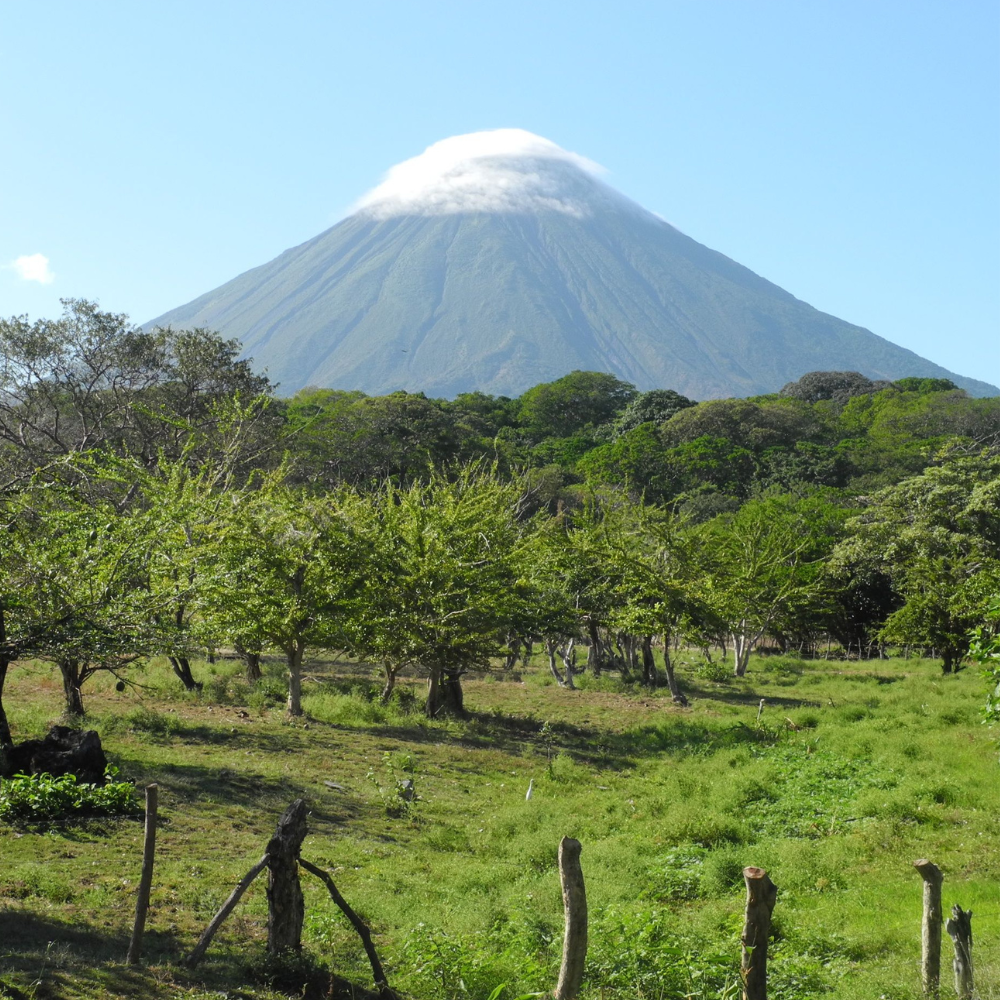
The Guardian of Mombacho is about the. So Mombacho is a famous volcano in Nicaragua. And so the guardian of Mombacho is said to walk the landscape in her long white dress, protecting all of its inhabitants.
And you hear a full range of stories, and sometimes they're a little scary. They're like ghost stories, right?
But, but ultimately she's the protector.
And so if you, with that movement You'll. You'll really hear. It's kind of a mix of like cloudy wisps and also urgency.
And then we. We pivot into the final movement, which feels much more of a joyful release.
It celebrates the goddess Isheville Yash, whose name translates roughly to Lady Blue Green artist.
And she's said to have painted the red soil and the olive gray tree and the back of the coral snake and the cloth of life. And it's just a very.
Again, it's a sense of relief, relief, I guess, and also release in that movement.
[00:28:28] Speaker E: It's.
[00:28:28] Speaker G: It's a joyful and celebratory final movement of the cycle.
[00:29:03] Speaker C: I heard you speaking as you disappear.
How long have you been wandering these rocky slopes?
How long will you protect these paths alone?
[00:31:20] Speaker G: I think I see you.
[00:31:26] Speaker C: I cannot understand the words that you.
Sam.
The.
Sa.
[00:35:22] Speaker G: The clock.
Sa.
[00:36:27] Speaker D: So, Deborah, in one of your earlier comments, you talked a little bit about how some of these pieces that you found from Baroque Latin America are housed in archives in many different places or pieces from Spain that are only in Guatemala. Without getting too in the weeds of this sort of like archival musicological Indiana Jones thing, can you tell us a little bit about this tune Marizapolos, and how it kind of covered a lot of ground in this time period in Latin America?
[00:37:05] Speaker A: Sure.
[00:37:05] Speaker E: Marizapalos is actually a famous song and it essentially has a ground base.
And this song and variations on this song end up in all kinds of different sources.
I first came across Mariza Apalos because it happens to be in a book called the Codex Zuola, which is in Mexico, but Mariza Apollos is all over the place. And to make this particular instrumental piece for Les Delices, I actually went to an incredible kind of musicological collection of differencias. And differencias is a Spanish word essentially for variations, and basically a source that compiles all the diffidentias in the Spanish tradition for forms like or canarios, or in this case, maritzapalos. And I essentially created or compiled our performance, our arrangement from two or three different settings of this bass line in this tune, which is also why the bass line changes sometimes. It's also why, you know, while the hemiola is a major feature to the tune and to the style, this moves around and it takes different forms in different variations because I was pulling from two or three different.
Mostly in this case, organ settings or keyboard settings, you know, and in some cases, you know, you have a two voice texture that would. Where there seems room for a three voice texture and, and, or splitting, splitting voices into a single line into two voices, for instance, to create a dialogue between two violins. So here, all those different things and there's, there's a moment for everyone. We have Mark Edwards on harpsichord improvising his own diffidencias.
There's a solo for viol, solo for oboe for one violin, for pairs of violins.
I think it shows everybody off.
[00:39:38] Speaker H: One of the beautiful things about chamber music and about what Ladalis does is there is this, this sense that it's a great team of musicians working together for a common goal. But each artist comes with their own sort of style and their own knowledge and their own instrument. As Estelle put it, you know, this
[00:39:59] Speaker D: is what I can do.
[00:40:01] Speaker H: So that's great. Thank you so much.
[00:44:09] Speaker I: Tune in on April 13th as Solanira premieres Women at the Keyboard. We'll feature two very special forte, piano and violin duos who are bringing the little known music and stories of 18th century women Composer pianists to life.
Our guests are forte pianists Yihang Yang and violinist Aislin Noski, who recently recorded sonatas by Jane Mary Guest. We'll also talk with and feature recent live performances by Les Delices, keyboardist Mark Edwards and violinist Shelby Yaman as we shine a light on the legacies of Mariana Mozart, Josefa Auenheimer and Maddalena Lombardini.
[00:44:46] Speaker E: Sir,
[00:45:02] Speaker B: Thanks so much for listening to this episode of Salon era. This episode was created by Executive producer Deborah Nagy, Associate Producer Shelby Yaman and me, Hannah DePriest, script writer and Special Projects manager. For this episode, I spoke with Laidali Stock, Founder and Artistic Director Deborah Nagy and composer Jill Delda Lyons.
Support for Salon Era is provided by Cuyahoga Arts and Culture, the Ohio Arts Council and audience members like you.
The music you heard on this program was performed as part of La Diosa.
This project was made possible by the National Endowment for the Arts and our beloved sponsors Michael Frank and his late wife Pat Snyder, Deborah Malamud, who was the artist sponsor for Esteli Gomez Commission, co sponsors Arthur Rotatori and Ursula Kornechuk, and recording sponsors Greg Nosen and Brandon Rood.
Les Delys receives general operating support from the Ohio Arts Council, Cuyahoga Arts and Culture and the Paul M. Angell Family Foundation.
[00:46:03] Speaker A: We are also very grateful to our
[00:46:05] Speaker B: Salon Era season sponsors, Deborah Malamud, Todd and Marilyn McLaughlin, and Greg Nosen and Brandon Rood. This episode featured musical performances by Leed Elise, recorded live in February 2026.
Huge thanks to Elaine Martone, Erica Brenner and Joel Negus for their recording work at this live concert.
Please subscribe and leave a review on whatever platform you're listening on. It really helps the show. From all of us @Salon era, thanks for listening and have a great day.