[00:00:01] Speaker A: Welcome to Salanira, a series from Les Delices that brings together musicians from around the world to share music stories and scholarship with a global audience of early music lovers.
Since 2020, Solanira has premiered over 50 episodes, each of which features a slate of national and international artists sharing live performances, prerecorded content and intriguing conversation you won't hear anywhere else.
I'm Deborah Nagy and this is the fourth episode in Solanira's sixth season, Women at the Piano.
In this episode we'll feature two very special forte piano and violin duos who are bringing the little known music and stories of 18th century women Composer pianists to life.
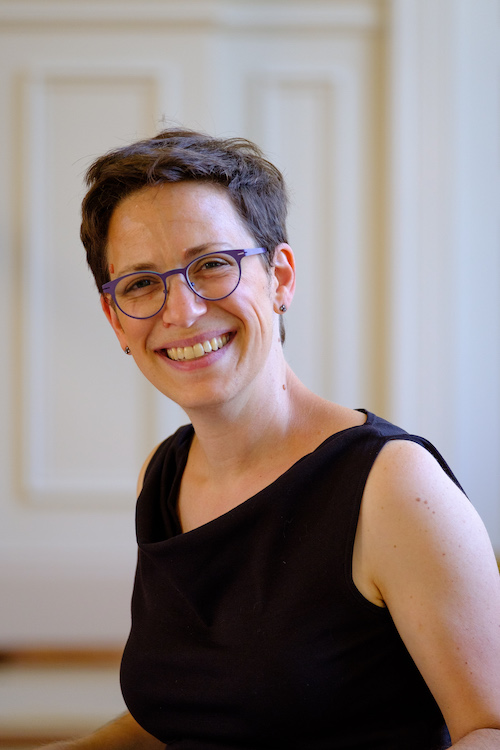
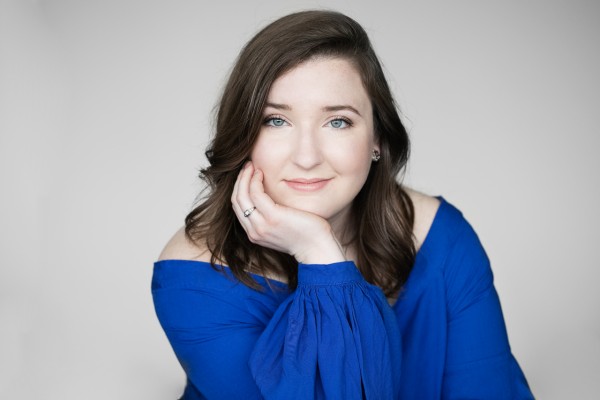
Our guests are forte pianist Yi Heng Yang and violinist Aislin Noski and Les Delices keyboardist Marc Edwards and violinist Shelby yaman.
In Solan era's fifth season, our episode Enterprising Women shone a light on two composer pianists active in London in the mid 18th century, Elizabeth Turner and Elisabetta de Gammarini.
Whether motivated by desire or circumstances, these composer performers forged professional careers beyond conventional gendered roles that privileged domestic amateur music making but deemed professionalization unseemly.
Instead, they pursued virtually all the professional opportunities available to them that included teaching, publishing their own works, singing in oratorio and opera, and even organizing and performing their own concerts.
The composer performers we'll learn about in this episode followed similar yet unique paths in the 1770s, 80s and 90s.
Jane Mary Guest was a child prodigy from Bath, England who ultimately became a student of Johann Christianbach in London. She performed her own piano concertos, published aria songs and sonatas for violin and piano. She presented her own series of concerts and she achieved a royal appointment as instructor to the Royal Princesses.
Meanwhile, in Vienna, Josefa Auernhamer earned a reputation as a much admired concert pianist and teacher who performed alongside Mozart in both private performances and concerts at Viennasburg Theater.
We'll also learn about Maddalena Lombardini Surman, a rare violinist composer whose formative years were spent at Sannazzaro DEI Mendicanti, one of Venice's famed Ospedale.
By the time she was in her 20s, however, she faced a crucial choice enter into religious life, stay on as an instructor at the school, or marry, and none of those options included the possibility of a continued career performing in public.
Lombardini, however, seemingly sidestepped this issue by marrying Ludovico Sirman, himself a well known violinist.
First up in this episode we'll hear music by Francisco Danzi. Francisca was born into a musical family with quirk connections in Mannheim, and she went on to establish herself as a celebrated German soprano whose brilliant but short career extended across the continent, from Paris to London and to Italy's most celebrated opera houses.
It was during Franziska's London sojourn that she published her Opus 1 and Opus 2, Sonatas for Forte Piano with Violin Accompaniment.
Let's listen now to the first movement, allegro, from her Sonata Number 4 in C major from the Opus Dew collection. In a recent live performance by Ladilli's core artists, violinist Shelby Yaman and keyboardist Mark Edwards.
[00:04:12] Speaker B: Sam.
Sa, Yihang Aislinn, I'm so glad to welcome you to Salon Era. As a way to begin, I would love to talk a little bit about women pianists in the 18th century, especially because we're talking about composer pianists today.
Thinking about the professional outlook for women
[00:10:03] Speaker C: in a general way, it's great to be here. Deborah, I love your question about women pianists in the 18th century. This is something I think about and try to imagine as I read about various figures like Jane Mary Guest. There are other historical figures who mostly were able to practice and compose and learn music and perform music in the Salon atmosphere. So what I see when I look at women pianists in the classical era is really the home and the domestic sphere being the place where they could put forth their talents and develop them and engage with other artists and intellectuals
[00:10:56] Speaker B: of their type of welcome, Mark. Welcome, Shelby. Most of the music that we're hearing today is actually for keyboard with violin accompaniment, which is its own kind of very specific genre. And Mark, could you talk to us a little bit about the accompanied keyboard sonata as a genre and what listeners can expect from this kind of very specific form?
[00:11:25] Speaker D: Sure.
So I think of this genre as really something that kind of originated in France.
It certainly has some antecedents In Germany, like J.S. bach wrote music for obbligato keyboard and violin, but it's really the French model, I think, that became important historically.
And so in the beginning it had a lot of appeal because, of course, the harpsichord has many, many virtues, but it's generally not considered to be the most expressive of all instruments. And so the feeling was by adding something like a violin to the texture of the keyboard sonata, you could kind of add some of the expression of the violin to the sound of the harpsichord.
And so it developed over time, of course, and also the forte piano essentially took over from the harpsichord. And when that happens, we have the opportunity actually for the violin not just to kind of supplement and support the harpsichord sound, but to come into its own, because the forte piano also is extremely expressive in its own right. And so the two get to be expressive sort of on equal levels.
[00:12:44] Speaker B: That's so interesting. And, of course, the nature of these voices is quite different, both in terms of, like, the range that, you know, say, a violin or possibly a flute is in, and in terms of the kind of material, then kind of supportive material as opposed to soloistic material. Aislin, maybe you could talk to us about your experience playing accompanied keyboard sonatas and what that means to you and how it is, you know, different, say, than playing a Tartini violin sonata, for instance.
[00:13:19] Speaker E: Well, one of the things I really love about this, these sonatas, the accompanied sonata, is that it's really a collaborative effort to the extreme. You know, it's really music making with a friend.
And the lead voice, often, not always, but often the lead voice in these pieces is the piano. And my role is to be a very supportive collaborator, an accompanist. Occasionally I'll take. I'll take the lead. But it's really much more of a chamber music supportive role than one might think of in the flashier Italian, let's say, violin sonatas of the 18th century.
[00:13:58] Speaker B: Shelby, tell us a little bit what your experience, experience as an accompanist is
[00:14:03] Speaker A: like in these pieces.
[00:14:06] Speaker F: Sure. Well, first of all, it's so great to play with Mark, and an honor to accompany you.
I get to kind of give that harmonic support and think much more rhythmically. I've been thinking a lot personally about how much should I try to sound like a forte piano? How much should I try to, like, imitate the attack or do something different because I am a different instrument. And there's. There are times to do both, and it's really kind of fun.
[00:14:36] Speaker D: It's interesting, in playing this program together, we've gotten to encounter lots of different kinds of interaction between the keyboard and the violin. And you're right. Like in the case of the. This Dunzi sonata that you do double me a whole lot of the time, but that. That has its own special, special tone color as a result of the combination of instruments. In comparison, say, to the.
The early Mozart sonata that we play together, the sonata in B flat, where you're actually doubling me quite a bit less, and instead often playing in parallel thirds, parallel sixths, it's still kind of accompanying, but not in quite the same way.
[00:15:22] Speaker C: There's this idea of sociability in the 19th century, of being in the domestic sphere or the salon social network where you're really going to socialize with people. And the music reflects that. The chattiness of the music, the very act of saying, oh, let's pick up my violin. I'm going to double your right hand because it's fun and we can do it together. And I really think that's how these sonatas were generated, because the piano became the focal point of domestic music making because it was mass produced in the 1800s and there was more leisure time for the leisure class to play.
You know, the focal point of a social gathering in a salon would be the. To sit down at the piano. And then an organic next step would be. Whoever else had a melodic instrument would just stand right behind you. As we see, there's a painting of Mozart at the keyboard and I think his sister standing behind him holding a violin. They're looking at the same piece on the music desk.
[00:16:35] Speaker B: You make such great points about sociability and, of course, like the physical closeness of literally standing over someone else's shoulder and reading the same music. Can you introduce for us what we're about to hear?
[00:16:51] Speaker C: This is the second sonata of Jane Mary Guest in the set opus 1, which is in our forthcoming album, and it's in D major.
The idea of playing together and sociability comes up right away, doubling each other in thirds. And we present this very sparkling theme.
And, you know, Jane Mary Guest was also in the middle of a very vibrant social scene because she worked in a resort town, Bath, where people of all walks of life, wealthy people, less wealthy people, came to socialize and take in these mineral waters. They would actually drink half a pint of it, and they thought it was good for their health, became like a Palm beach or something in. In Georgian England.
So the sparkliness and the conversational aspect of.
Of Hermilia really comes out in this piece. It's. It's really lively.
[00:17:54] Speaker B: Fantastic. Well, let's.
Sam, sa, Thank you so much for sharing this beautiful performance that you did for Gems. And you've been talking about the recording of the complete sonatas of Jane Mary guest for Opus 1. There's been a lot of anticipation for this recording, which I understand was recorded a couple of years ago, is coming out this July.
And I wonder if you could talk to us a little more specifically. You mentioned Jane Mary Guest's origins in the city of Bath, this resort town, with lots of influential people coming in and out all the time.
But tell us about her origin story and perhaps the route that she took towards this first, first publication.
[00:21:30] Speaker C: Jane Mary Guest was born in Bath, England, and as I mentioned earlier, the town is called Bath because the Romans discovered that there were hot springs there, and they turned it into this health center. In 1800s England, it was still a place for people to resort to.
Jane Mary Guest father was a cobbler, apparently, and also a band musician who played in these rooms where people would drink the water from spigots, I think, and, and socialize. And there would be a little orchestra on the side playing music.
So I'm pretty sure she would at least have watched her father do this.
But she probably started to, you know, learn and play music with him herself. And she was educated by a local organist and then quickly showed herself to be very gifted. I think by the age of six, she gave her first public performance in Bath, and there's record of that. And she soon was introduced and connected with a castrato named Venancio Rauzzini, who was known because Mozart had written a sacred vocal work inspired by him in Italy and Rossini. Then I think he was done making his career in the continental Europe and had migrated to England to increase his fortunes there, and had gone through London and been through the circuit there as a singer, but finally settled in Bath and became this local impresario.
And he identified Jane Mary Guess talent, and he taught her a lot himself.
And he would put on these salon type social, big social evenings in the Bath social rooms, where people would come and socialize in the evenings after doing their water treatments during the day and hear concerts. And Jane Mary Guess is the pianist who's listed in most of the programs throughout her life. At 14, Rozzini sent her to London to study with J.C. bach. And I think Jse Zbach taught her composition pretty well and must have been impressed with her because he introduced her to, you know, Princess Charlotte and all of the royal family there.
And so in the subscription listing which accompanies the publication of these Opus 1, 6 violin sonatas, which Aen and I have recorded probably for the first time.
You have maybe 400 names of the who's who of royalty all over England and all the prominent musical figures of the time. Meeting JC Bach really put her on the map, so to speak. And then she moved back to Bath, got married and became like the piano teacher, the pianist, and, you know, was very active.
[00:24:36] Speaker B: Yeah, that's. That's an amazing story.
Aislinn, I wanted to ask you, who plays so much different music, for sure, what was it like for you to take a deep dive into Jane Mary Gast's music?
[00:24:51] Speaker E: Well, it was really kind of a rare pleasure for me. To dive into somebody, a composer whose music was so completely unfamiliar to me.
I'm very fortunate to get to play lots of different kinds of music, as you say. And so some of my favorites are, as I already mentioned, Vivaldi. I love Haydn, I love Beethoven, and I don't love the them any less after all this time. But they're. I can't say that their musical style is new to me anymore. There's always new things that I'm thrilled by in their music. But it is, it's an unusual day for me to get to meet an entirely wholly new composer friend and to try to get to know them. And I was just continually intrigued and sort of delighted by, as we worked our way through these sonatas, just getting glimpses of what I imagine to be Mary Jane Guest's personality.
I think she.
Who knows? But to me, from the way that she writes her music, she probably had an enormous wit and I think she was probably capable of being very pleasant. She writes so many beautiful, lyric, pleasant melodies.
And then I think she must have been extremely clever from the way that she often takes very small kernels of musical ideas and really develops them in a fascinating way that you might not, you might not expect. And that's, that's unusual. That can be unusual in composers. In my experience of the time, Mary Guest to me, has a way of very often surprising and tantalizing and delighting in a way that actually reminded me of someone like Joseph Haydn. So it was, it was really nice to, to get to know a new voice. It was really a pleasure.
[00:26:43] Speaker B: Absolutely.
I mentioned a few minutes ago that these accompanied keyboard sonatas are often, you know, notated in, in essentially three staves, the grand stave for the piano and, and a melodic part above that. And for the final sonata in her Opus 1, the sonata number 6, it just looks like a piano sonata. Right. There's only two staves.
And I understand that the two of you made some really interesting and I think wonderful and well informed performance practice choices, considering that this is otherwise a collection of accompanied keyboard sonatas and then suddenly you only have two staves of music. For the last sonata.
I'd love to hear you talk about the, the choices you made and, and, and your process and we'll get to experience that in a couple minutes.
[00:27:37] Speaker E: Yeah, I mean, I can't actually remember the, the moment that this happened. Maybe it was you who said, well, what if you just play along anyway, you're already here. And I don't know, we, we really. I mean, I, I guess it's important for me to put forward that this is just a possibility.
We don't, of course, there's no, there's no way that we know that she intended this, but hopefully she'll be happy that I just wanted to play along. So, you know, I started to think, well, maybe she just ran out of time for that last violin part. Hopefully she won't mind that I, that I forced my way into the ensemble. But, you know, that we, we sort of just started experimenting at first, not even thinking, I think with an intention to necessarily record it. It was really fun as it felt like I could be part of the construction of the piece.
[00:28:26] Speaker C: Yeah. And I think being a part of the construction again is that spirit of sociability, Aislinn, that spirit of improvisation where you're with your friends in the moment making music like adapting, rearranging in real time on the instrument. This is an 18th century performance practice.
[00:28:45] Speaker E: Until we actually hit the red button in the recording studio, it was changing all the time. I, I suspect it will keep evolving. It's sort of like, you know, you know, playing a board game rather than playing a. And you're, you're in it together rather than playing, interpreting a set piece of like, you know, museum music. It's a collaborative and in the moment and feels like it's, it's really alive.
[00:29:10] Speaker C: Yeah, yeah. And it's the same spirit of, you know, ornamenting real time improvising cadenzas. It's this kind of flexibility that we get from the text.
And, and I was just thinking that, you know, probably someone in 1810 looking at this Sonata Number 6 would have assumed this immediately. This is my theory, but. But there's only really one major Jane, Mary Guess scholar out there. A wonderful. And he's done wonderful work. Someone named Kenneth James, who wrote his dissertation in England on her. And he thinks the opposite. He said, well, clearly in the sixth sonata, and if we, if you look at the score, there are all these double thirds in the right hand right from the beginning in 16th notes, which, you know, I would gladly practice if I had to and do it. But, you know, he said, clearly she was a virtuoso pianist because she writes all double thirds for the right hand and this is the way you should play it. But I guess Aislin and I are providing the rebuttal, which is clearly she would not have wanted to play the double third. She would want to share them with her sonata partner.
[00:30:22] Speaker B: Well, I think it's very compelling, very convincing, and congratulations on this new recording. I Can't wait to hear it when it comes out in July in full.
And now let's take a moment and listen to this excerpt From Sonata Number 6 of Jane Mary Guest.
[00:33:37] Speaker E: Sa.
[00:35:21] Speaker B: Sa.
Sam sa.
[00:37:33] Speaker A: Thanks for watching this episode of Salonira, which features performances and recordings by forte pianist Nihan Yang and violinist Aislin Noski and by Lady Lisco artists Marc Edwards and Shelby Yaman.
If you're enjoying the music and conversation in this episode, I hope you'll consider making a tax deductible gift in support of Selor era.
With your support, we can continue to collaborate with engaging guests from across the country and around the world.
You can support Salon Era by making a donation at www.salaneera.org support.
Up next, we return to our conversation with Mark and Shelby, who shine a light on Maddalena Lombardini sermon.
In the 18th century, gifted female musicians could potentially expect to make careers as singers or pianists, but rarely as violinists.
As we'll learn, Maddalena Lombardini Sermon's circumstances and her playing were exceptional.
[00:38:36] Speaker B: Welcome back, Shelby. Mark, on the program that you created and performed at the Cleveland Museum of Art in March included a piece by Maddalena Lombardini. Sir Men, can you give us a brief rundown of what you find most appealing about her and her music?
[00:38:59] Speaker F: Sure. Well, I should start by saying that this was actually published under her husband's name, Ludovico, and she published on her own, under her own name, but also, for example, Hearst String quartets were published under both their names, which is now seen as just an avenue for her to publish her music. This piece is likely by her, and if not, at the very least she would have been playing probably this piece. Pieces like it.
Her music really features what the violin can do, and in this particular sonata, there's it kind of goes across the board. Okay, we're going to do some scales, we're going to do some arpeggios, we're going to do some string crossings. How about some thirds? She just kind of sprinkles in all the cool things that a violin can do.
A lot of her music is similar. It's exciting. It's exciting to play, and there's a lot of opportunity within it to be yourself and kind of showcase what you, as the player want to showcase about the instrument and about the piece.
[00:40:14] Speaker B: Well, I think your performance is very compelling and it was interesting. When I saw the music on the page, to me it looked like another violin showpiece, but it's actually very touching and very compelling. I feel like performance, and as a representation of potentially of her artistry, I think it's also extremely compelling.
Now, this piece, which we're about to hear, is actually the only one on your program and also on the Salon episode that basically puts the forte piano into an accompanimental role, as opposed to a solo role with accompaniment.
And so it's really for violin and bass. And, of course, Mark, you spend a lot of time on such an amazing realizer on the harpsichord. And how is it different in this case and in this kind of vein to create an accompaniment for this piece and for Shelby on the forte piano?
[00:41:23] Speaker D: Yeah, it's a good question.
So one of the things that I think nearly every harpsichordist learns to do in playing figured bass is to basically connect the idea of texture and dynamic, because obviously we have fairly limited means of changing dynamic at the harpsichord. And so we learn that when we want to play louder, we play more notes, and when we want to play softer, we play fewer notes.
And so those are to some extent, my instincts now when it comes to making a figured bass realization. The forte piano, of course, doesn't require that of you. You can have a very, very large chord that's played softly, for example. And so to some extent, the texture and dynamic are now separate. And it means that you have the opportunity of making some interesting textural choices that hopefully then won't get in the way of what the violin is doing, because you can just play them softer and have them truly be accompanimental. So exploring that has been a lot of fun.
[00:42:37] Speaker B: Let's listen now to this first movement from the Sir Men Violence. Nada Madarado.
Sa.
Shelby, Mark, thank you so much for sharing this beautiful performance that we just heard of. Simen Violin Sonata, first Movement. This program from which we're excerpting your performances, is actually one that is themed around Mozart's sister, Mariana Mozart.
[00:48:40] Speaker A: She was a great pianist in her
[00:48:42] Speaker B: own right, but we don't have any of her surviving compositions.
And so in this program, we tried to kind of create a context and think about what her career might have been like, what her female contemporaries were like, and the kinds of choices and professional work and even artistic risks they were taking. We're going to hear one last piece by Josefa Auernhamer. And Josefa Auernhamer was a actually colleague and contemporary of Mozart's in Vienna, probably right around the same age as Mozart's sister Mariana.
And Mozart also dedicated various pieces to her. Both solos accompanied violin sonatas, piano concertos, and we are going to hear variations set that she wrote on a famous tune, Papageno's tune from the Magic Flower Flute. And Mark, could you introduce this piece a little further for us?
[00:49:45] Speaker D: Yeah, I like all theme and variation sets. We hear this extremely famous theme at the beginning more or less straightforwardly.
And each variation, I think I said to you earlier during a rehearsal, Deborah, it's like each variation is actually five or six variations in effect, because there's not just one idea that kind of drives the variation, it's many, many ideas in succession. And so I think what happens a lot through this piece is that the theme gets broken apart into little pieces and highly sort of sectionalized in that way, so that each part of the theme can have its own kind of unique flair. And it's also amazingly well written for the piano. Lots of fantastic techniques on display.
[00:50:39] Speaker B: Super fun.
Thank you both so much for joining me for this episode of Solanier and also for creating this beautiful, beautiful program this past March, making a context around Mariana Mozart. It's great to talk to you and even better to hear your performances. Thank you.
[00:53:06] Speaker C: Sa.
[00:55:40] Speaker B: Sa.
Sa.
[00:57:25] Speaker A: Don't miss the latest virtual concert from Les Delus, La Diosa. Performed live this past February, La Diosa
[00:57:32] Speaker B: offers mesmerizing harmonies and swirling vocal lines that evoke divine presence in both the
[00:57:38] Speaker A: heavens and earthly realms.
At the heart of the program is Soy La Diosa, a new commission by Nicaraguan American composer Joe Levy featuring acclaimed soprano has to Be Goddess.
Lyon's bilingual four movement work for soprano and period instrument ensemble celebrates the essence of the divine feminine while centering Latin American folklore and historical legends.
Additional 17th and 18th century music preserved in sources from Guatemala, Bolivia and Peru combine indigenous European and African influences for a program full of rhythmic vitality, expressive contrast and a compository flair.
Les Delices virtual series is available on our virtual concert site at Les Delices VHX TV where you can get access to a single concert video for $20. Watch La Diosa anytime through the month of April as often as you want. Visit Lesdalice VHX TV to learn.
Solan Era is a series from Les Delices that brings together musicians from around the world to share music stories and scholarship with a global audience of early music lovers. Our video episodes from Season 6 will remain available on YouTube and at Solanira.org until June 30th. Don't miss your chance to watch Musical Vision, celebrating the legacy of blind and visually impaired historical performers and composers with guests Lucas Harris, Albano Berberi and Kathleen Cantrell. Music and labor with guests Anthony Tressick King and Gabe Schreffler Sounds from the Western Frontier, which considered the music and sounds that reverberated across the Western frontier in the decades following the Revolutionary War with contributions from Kim Grunwald and Dominic Giardino or Women at the Piano featuring Yiheng Yang, Aislin Noski, Mark Edwards and Shelby Yaman.
Available now and until the end of June.
Keep in mind all of our audio only podcast episodes remain available anytime at solaniera.org or wherever you listen to podcasts.
Podcast listeners can also access exclusive audio only episodes of about the creation of Lady Lisa's concert series programs featuring musical insights, historical context and audio highlights.
Thanks for watching and listening to Solani Wrap and thank you for your support.
[01:00:12] Speaker G: Thanks so much for listening to this episode of Salon Era. This episode was created by Executive Producer Deborah Nagy, Associate Producer Shelby Yaman and me, Hannah depries, Script Writer and Special Projects Manager. Our guests for this episode were Aislin Noski, Yi Hing Yang, Mark Edwards and Shelby Yamin. We heard musical selections by Francisca Danzi, Josefa Auernhamer and Madeleine Lombardini. Sir Men from a recent live performance featuring Made Elise Corps members Shelby Yaman and Mark Edwards, pianist Yi Hing Yang and violinist Aislin Noski were also also featured in music by Jane Mary guest, whose opus 1 Sonatas for Piano and Violin will be released on a forthcoming CD on the Dezel label.
Support for Salon Era is provided by Cuyahoga Arts and Culture, the Ohio Arts Council and audience members like you.
Special thanks to Dr. Joseph Sopko who sponsored this episode of Salon Era, Jerry Fathauer who sponsored our guest artist Yu Hing Yang and a huge thank you as always to our Salon Era season sponsors Deborah Malamud, Tom and Marilyn McLaughlin and Greg Nosen and Brandon Rood.
A one hour filmed version of this episode is available on salon era.org where you can also get full performance details and learn more about the music and information shared in this and any episode. If you enjoyed this episode, please subscribe.
Consider making a
[email protected] and submit a review. It really helps the show.