Episode Transcript
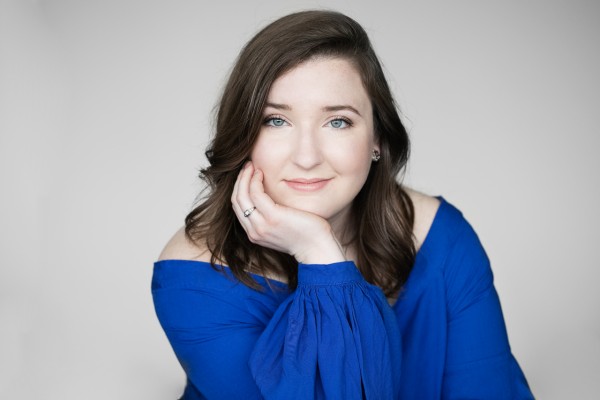
[00:00:07] Speaker A: This is Hannah D. Prriest welcoming you to the final podcast exclusive from Solanira and ladalise for our 20252026 season.
These exclusive episodes shine a light on the concerts that Ladalise creates here in Northeast Ohio as a way to share insights and music with our fans all over the world.
Now, today is a little different for me because we're talking about Starstruck, a concert from the end of April 2026 that featured yours truly singing alongside an expanded roster of Ladalise performing an incredible all handle program.
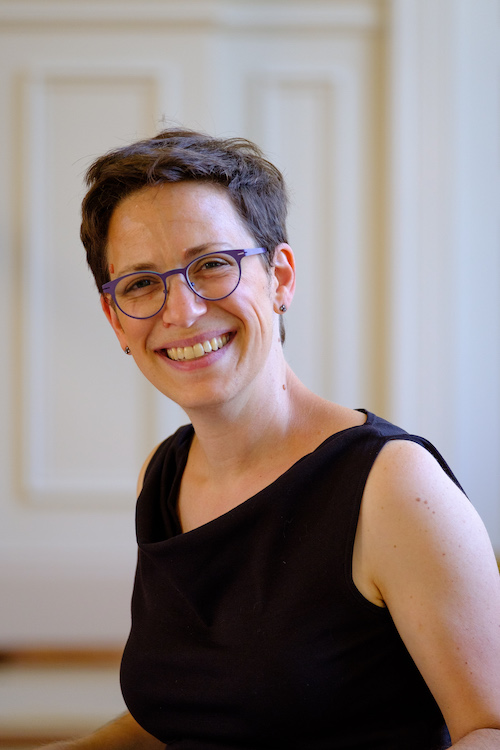
Artistic director Deborah Nagy will tell you all about it in our interview, and I'm also thrilled to be bringing you a conversation I recorded with Dr. Susan McClary, iconic feminist scholar and musicological firebrand, and she was also my favorite teacher from my time at Case Western.
The musicians featured on these recordings soprano Hannah Depriest yes, that's me. Oboist and director Deborah Nagy, violinists Shelby Yaman and Laura Lutzky, violist Kate Goddard, cellist Rebecca Landel, and harpsichordist Mark Edwards.
Before we dive into my interview with Susan McClary, let's listen to the first two movements of Handel's Concerto Grosso, Opus 3, no. 3.
As you'll hear in my conversation with Deborah later on, Handel likely played little to no part in the publication of Concerti Grossi and trio sonatas that brought together these fragments and excerpts from earlier works by publisher John Walsh.
The modest orchestration of this concerto in G major mirrors the small ensemble of violins and oboes that Handel worked with at Canons, home to his early patron, the Duke of Chandos, when he was just getting started in England.
The concerto's opening largo and initial allegro are recycled, in fact, from The Chandos Anthem no. 7, My song shall Be Alway.
Enjoy.
[00:04:37] Speaker B: Sa.
[00:05:03] Speaker A: Well, I am really, really delighted to be speaking to Dr. Susan McClary today, who is a world famous musicologist, an incredible scholar and phenomenal writer who has influenced generations of feminist scholars and just everyone in the field of musicology, including me. When I was a student, I was lucky enough to be one of Susan's students, so. So it is a real delight to speak to her today on the podcast. Hi Susan.
[00:05:36] Speaker B: Hi. It's a real honor to have had you as a student and to see you becoming one of these stars.
Just meteoric rising and I'm just so proud of you and it's always a delight to talk to you.
[00:05:56] Speaker A: Oh, I'm so glad that you said that. Now it's recorded for posterity.
We actually got to Hang out a little bit while I was in Cleveland, which is where you live, you still teach at Case Western Reserve University.
And of course that's also where Lady Lys does its concerts. And you have been such a generous supporter of Deborah and of Ladalise and of me for many years.
And most recently at Starstruck, you actually were like this celebrity pre concert talk host which was such a treat. Everyone loved it. I unfortunately missed it because I was, you know, panicking about the concert that I was about to sing.
[00:06:36] Speaker B: So today we gotta get to your slinky gown.
[00:06:39] Speaker A: It was very slinky and it was very complicated. It had like a whole corset back thing. I did need help. I thought that we could start with kind of like the big picture, which is that Lady Lis created an all handle program for our season finale. And you know, listeners might know Messiah or maybe some of his better known operas, but just in general, he's one of these baroque composers that has really endured and remains very popular in a mainstream classical music sense today.
And I'm just curious, like from your perspective, you're very, very well educated perspective, what do you enjoy about Handel? His music or his story?
[00:07:19] Speaker B: Let me start by saying that both Bach and Handel were born in the same year. Both in Germany, 1685.
They went in entirely different directions in their careers.
Bach settled in as principally a composer for the church.
He was a devout Lutheran.
He did have one very small court gig that lasted three years or so, but for the most part he just wrote for the church.
Handel, on the other hand, is one of our first real international stars of the 18th century.
He became an attraction even when he was very young.
He began to attract important patrons starting in Germany. He was supported by the future King George of England. He was recruited by the Medicis to come to Florence. He was then recruited by the Ottoboni cardinal to Rome.
And then he was brought by a number of English aristocrats to set up shop in London, where the idea was he would bring Italian opera to the London stage.
And he, he started his own opera company with the support of these people.
The opera venture didn't work very well. The English were not really interested in listening to Italian and they were absolutely not interested in seeing the castrati who had been brought in to perform these pieces. This went against good English Protestant values, shall we say.
And the opera venture crashed and burned several times before Handel was persuaded to write English oratorio, which were basically operas, but written in English and without the Frou Frou and with Gender normative assignments so that you have women performing the parts of women and men singing in the range that God meant them to sing in.
And so. But we have in Handel someone who knew German music and counterpoint was very, very well schooled, as in, in the style that Bach was.
Then he goes to Italy and he acquires all of the dramatic skill that was available in Italy, takes all of that to England.
This is an extraordinary career that we have here.
Bach and handel are our two pinnacles of the mid 18th century.
They are often referred to as Baroque. I do not think they are Baroque except in very particular circumstances. And we'll get into that.
They are, to my mind, creatures of the 18th century, the Enlightenment. But this was an extraordinary career.
Handel was also involved in the intellectual circles in London. He knew Jonathan Swift, he knew all of these people. They regarded him as a peer.
Bach had no such context, was really quite isolated and had to find ways of learning about music that was going on other places, largely through acquiring scores.
So just radically different worlds.
And yet we see them as sort of peers, as the great composers of the mid 18th century.
[00:11:38] Speaker A: Something that occurred to me while I heard you talk about that. Yeah, it's amazing to think these are two incredibly hyper productive and creative men.
Bach, of course, as you said, isolated and also stuck to a schedule of producing cantata after cantata after cantata on a weekly basis. And his kind of depth of creativity focused on, of course, he wrote other kinds of music too, but really focused in on this one genre is one kind of thing to admire and a kind of genius to contemplate. But then Handel, you're right, it's like kaleidoscopic. And also there's something like a chameleon about Handel where he was able to not just exist in these different contexts, but really dominate. And yeah, as an entrepreneur, as a thinker, as a mover and shaker in society, in all of these ways, dominant and adaptable.
[00:12:37] Speaker B: Yeah.
I'm going to just toss one more thing in and that is most musicologists accept to know that, that Handel was at least involved in the gay subcultures of his time. Wherever he went, the Medici who recruited him was sort of notoriously gay, as was Cardinal Ottobolne and those English aristocrats who brought him in. That doesn't say we do not know anything about Handel's personal life.
[00:13:17] Speaker C: We.
[00:13:17] Speaker B: Which is very strange given how cosmopolitan he was.
But even during his own time, people were asking, wondering about why he never got married and what was going on. But you look and you find that he is always smack in the middle of gay subcultures, which were a new thing at the time.
These were subcultures that were able to flourish only in urban environments.
So it's not that, yes, homosexuality has been with us always, but these were genuine subcultures and they were very, very important in sustaining Handel's career. I mean, the two principal pieces of scholarship, my former colleague and the late Gary Thomas wrote a very important essay in queering the pitch called Was George Frederick Handel Gay? And then Ellen Harris wrote a very important book about Handel as Orpheus when he was in.
In Italy.
Tracing out all of these kinds of connections.
[00:14:41] Speaker A: This is a great time to mention on the Solaniera website, we have a list of resources for every episode. Those links to those books and articles will be for sure. And there as will of course, links to Susan's own work.
So speaking of Handel's time in Italy as like this really foundational kind of experience for him.
The solo motet that I sang in this concert, Sile Teventi, we're not totally sure when he wrote it, but it to me feels like a youthful work and it feels very Italian. And even though it's in Latin, of course, as it is a sacred motet, the aria that we're going to hear is Dulcis Amor, which means sweet love.
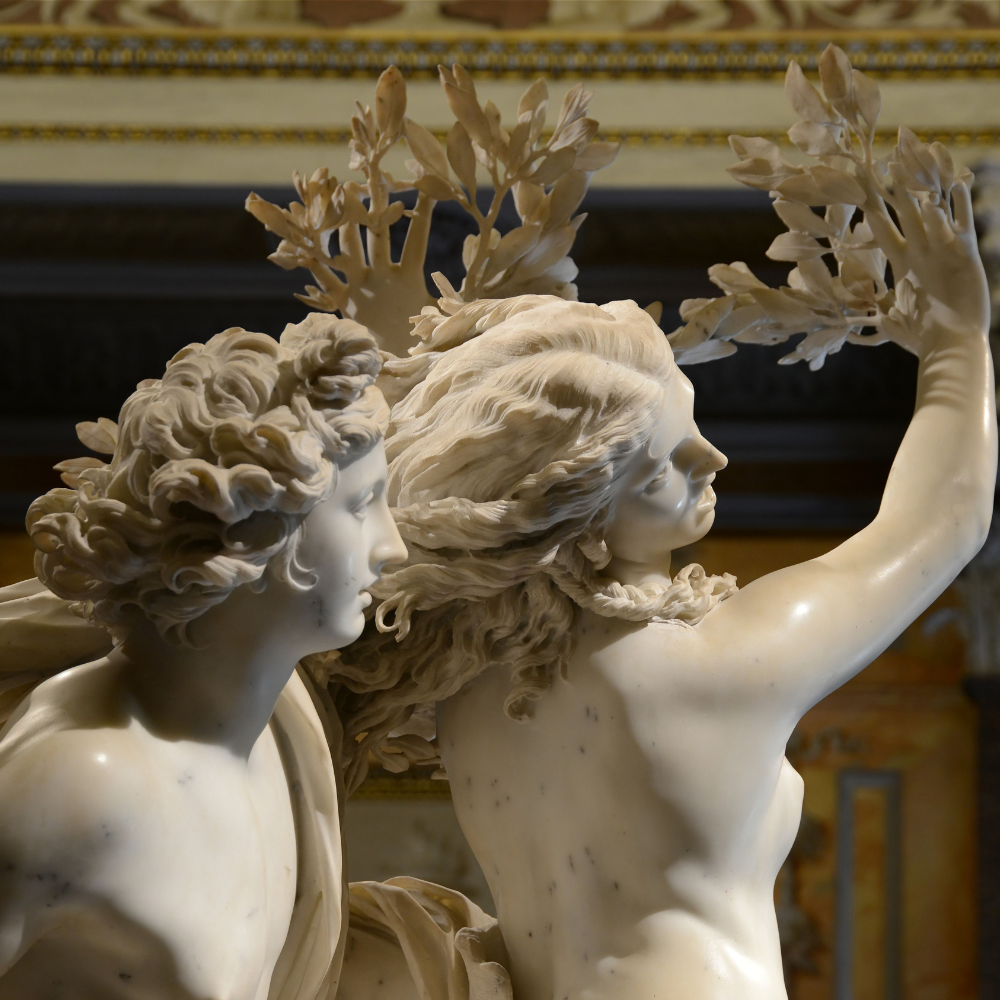
And when I was preparing this aria, the image that kept coming to my mind as I sang was Bernini's sculpture of the ecstasy of St. Teresa. And not only is that image on the COVID of your book Desire and pleasure in 17th century music, but I vividly remember it being in a slideshow that you presented during the seminar on Bach cantatas that I took with you while I was a student at Case.
Can you talk to us a little bit about this sculpture and its connection to your arguments about ecstatic devotional music?
[00:16:02] Speaker B: Sure.
I just finished doing a seminar on divine love in 17th century music.
I don't think we can really understand 17th century music without understanding how fundamental that was. The combination of the erotic and.
And the sacred is really quite distant to most of us now.
But all of this comes to us through the Song of Songs, that strange book that was included in the Hebrew Bible.
We still don't know why, but profoundly erotic, explicit love poetry.
In my Divine Love class, I made everyone read it out loud together.
Oh, they were all just embarrassed to tears. There were rabbis who have said no one should be allowed to read this before the age of 30.
[00:17:00] Speaker A: 30, yes.
[00:17:02] Speaker B: So it's always been electric.
St. Teresa had a series of visions in which Jesus would actually come. And she felt that she was united with him in.
In spirit, but also in body.
People who observed her when she was having these trances were not sure whether she was being possessed by Jesus or by the devil. I mean, this is the moment of all of the witch burnings, remember?
And the church investigated her over and over and over again. So, I mean, this is very dangerous stuff.
She wrote in the vernacular and everybody started reading what she had to write. She's a vivid, gorgeous writer, and she wanted to explain to people how through devotion, through prayer, you could put yourself in that position or where you were open to having possibly that one to one relationship with Jesus.
The most spectacular scene, and the one that Bernini draws upon, is where she suddenly encountered an angel who was stabbing her repeatedly in her entrails in her heart with this burning, burning love.
And that is the moment that Bernini captures in his famous statue.
I was thinking of that, particularly in the second part of your aria, which is, if you strike me, there are no injuries. You. Your strokes are sweet because I live totally in you. There's a lot of masochism here.
And you find this also showing up in John Donne's batter my heart. 3 person God. I mean, all of this stuff, this is baroque. This is what the 18th century meant by baroque is that weird stuff they used to do.
But, but the.
I think the. Those. Those moments of. Of striking and injuries and. And things like this, this goes completely back to Teresa, to John Donne in that sense that this. We're not talking about just kind of holding hands with Jesus.
[00:19:58] Speaker A: We're talking like walking on a beach with Jesus. And there's two sets of footprints. This is much more explicit.
[00:20:05] Speaker B: Yeah, no, no, this is it.
The other part of the text here, and this Handel does so marvelously, is the line come transfix me.
And whenever the word transfix comes in, everything melts into this chromatic morass.
So that there is, you know, there is an address to Jesus Come and you know and I adore you. But then with the word transfix, we swoon. We go off into this trance state and we have to recover from that.
[00:20:52] Speaker A: Let's listen now to the aria Dulcis Amor from Sile Te Venti, recorded live at Starstruck.
[00:20:59] Speaker B: It.
Sa.
Ha.
Dr.
[00:23:37] Speaker C: Sa.
Total.
[00:24:29] Speaker B: Sa.
Sam.
K.
[00:26:16] Speaker A: Dream.
Sam
[00:27:34] Speaker B: j.
[00:28:11] Speaker A: Thanks for listening to this episode of Salon Era, which features excerpts from a live performance by les Delys from April 2026.
In a moment, we'll get back to my interview with Susan McClary. But before we do, a reminder that all of our video and audio exclusives from Solaniera's sixth season are now streaming.
Video episodes are on YouTube through the end of June, and podcast episodes remain accessible in perpetuity.
Now Salon Era is made possible by tax deductible donations from our fans.
You can support Salon Era by subscribing to this podcast and by donating@salon era.org thank you so much for listening to this show, and we hope you'll subscribe as well to the podcast while you're at it. Leave a review it really helps the show.
We're about to listen to the first movement of Handel's Trio Sonata, which is Opus number five, number one.
And I am wondering if you can talk to us a little bit about this andante movement.
[00:29:14] Speaker B: Sure.
I want to just say this performance is one of the most transfixing things I have ever heard. I could not believe my ears.
This sonata features, of course, two violins, same sound, and we start off with a very enticing and yearning melody in one of the violins and allowed to complete a whole phrase before the partner comes in and joins in repeating the same music. And after that, they begin.
They're intertwining.
When the principal theme comes back about two thirds of the way through the piece, they are in much closer conjunction. So the first violin starts off and the second one cannot wait to come back in, and so starts its entrance earlier so that the intertwining can happen much, much sooner.
The transparency of this performance, the ways the ornaments are constantly pulling on, you know, just every possible erotic node you have, you know, it's. It's just spectac.
The rest of the sonata is great. The second movement takes off from there, but it's a much more playful kind of interaction between the instruments. But that first movement is unbelievable.
[00:31:06] Speaker A: Well, let's give it a listen and you'll hear Shelby Yaman and Laura Lutzky playing violins.
[00:31:19] Speaker B: Satan.
[00:33:42] Speaker A: All right, Deborah, it's so nice to talk to you after having just spent actually quite a lot of time with you in Cleveland and on tour, because we just wrapped some Starstruck and a West coast tour for Arcadian Dreams, which is our new album, which is available for purchase.
And that really came just a few weeks after La Diosa, which people can listen to our podcast episode about that concert, and then also before that, our Robbie Burns concerts and just a slew of a bunch of other Lady Lys projects throughout this year and then, of course, throughout this whole season.
So we're still looking forward now to our June 5th benefit.
But just to press pause for a second, how are you feeling in the wake of everything that's come before?
[00:34:34] Speaker C: You know, we've had an extraordinary season at Les Delices. I cannot believe the range of different programming that we have experienced, experienced. And we've had some incredible soloists, like
[00:34:48] Speaker A: some Les Deliste programs, like Moonlit Mozart comes to mind. Starstruck focused in on just one composer, which was George Frederick Handel, arguably one of the most beloved composers of the Baroque period.
And so it feels a little bit weird to even ask this, but why did you want to highlight his music on the Les Delices season finale?
[00:35:10] Speaker C: Well, I mean, there are a few reasons, of course. With Les Delices, what I'm always interested in is diving into and giving people the opportunity to experience music that they don't know.
And one of the things that's fun, of course, with music of Handel, is that people think they know Handel. And so it was a fun opportunity to offer some rarely heard works and to offer some music and also genres that people are less familiar with or less inclined to encounter.
So that was part of the idea, you know, behind programming. Siletti Venti, for instance, this, you know, motet, essentially, or that lives in this nether region between sacred and secular. Hence our sacred and profane title for this podcast episode, you know, and also the cantata repertory.
[00:36:06] Speaker A: Yeah, it was such a fun program to sing. And as you said, Sile Teventi is just a phenomenal piece.
It's got so many, like, different.
It goes through so many different characters.
It's really fun to listen to.
But I also really loved the instrumental music on this program, and I loved hearing our fantastic musicians perform that. And I just. I'm curious to know, out of all of Handel's music for instrumental forces, how did you come to select the trio sonata and Concerto Grosso that you did choose?
[00:36:43] Speaker C: You know, the Concerto Grossi of Handel are funny, right? Because let's admit actually that Handel didn't write them. I mean, he did, but he didn't compose concerti grossi in the way that they were published, if that makes sense. They were published by the English music publisher John Walsh.
[00:37:05] Speaker B: And.
[00:37:05] Speaker C: And he essentially, without asking anybody, least of all Handel, kind of assembled these collections of concerti grossi and also the trio sonatas of other works by Handel that were in circulation. So they're a hodgepodge. You know, I also find it really funny also when we. When people talk about, like, oh, the Handel G minor oboe Concerto, which was another piece that I considered performing and I don't like it. And Handel, I mean, it's not that Handel didn't write it, but Handel didn't. You know, he wrote the music, but it was never conceived as an oboe concerto. And so it has a really strange, strange, I don't know, vibe as far as I'm concerned. It feels not terribly cohesive, but I feel like the Opus 3, number 3 Concerto Brosso works really well.
It is basically the first two movements are taken wholesale from one of the shandos anthems. So John Walsh hasn't really meddled with that music. And it served as a kind of overture to another piece, the Trio sonatas. And we'll hear a little bit work exactly the same way. And in fact, so I chose that particular trio sonata because I do love the opening movement and, and it was music I knew because actually it also exists in several other forms in B flat major and not in A major, including as a so called oboe concerto and including as a so called Concerto a Cinque and other things. And it was really funny. As Shelby was rehearsing the Trio Sonata, she turned to me and she said, I know this music, but I know I haven't played this and what's going on? And I said, well, do you remember on our Sounds of Sancho's London program, there was a little concerto in five parts for oboe A, two violins and, or I guess four parts. Oboe, two violins, and Continuo in B flat major. And that is the same opening movement.
[00:39:13] Speaker A: Poor Shelby. We were really, like, messing with her head the whole program because there were also multiple movements, moments in the Sile te venti, where we were like, we knew where the little fragment of melody, like I had sung it before, but in a totally different context or like just certain modulations or certain little, like, turns of phrase. And we were able to identify like four or five different things that all of us had done before that was like Handel borrowing from himself.
Well, Deborah, before our Sunday afternoon performance of Starstruck, we had a special opening act which was like, so heartwarming and so cool, which was that the student chamber orchestra of Lakewood High School came and performed excerpts from Teleman's Don Quixote Suite. And this is a group that some of our Lady Lyse corps members has been coaching with as part of Les Delys wider kind of educational partnership. Can you tell us a little bit more about this and how it came to be and how it fits into our ambitious community outreach engagement plans?
[00:40:25] Speaker C: Actually, in the summer of 2024, we reached out to Lakewood High School, which has this very strong string program and this unconducted chamber orchestra, and said that we were interested to explore the potential for residency. And it just happened to be amazing timing because they had previously had the Gavani String Quartet in residence there with you know, a focus on, you know, on chamber music and non verbal communication and all this stuff. That fall also we had on loan for several weeks, three, four weeks, a set of baroque bows that were generously shared with us by a Maryland based Lutier named Carolyn folks.
And we, you know, shared these bows with the students at Lakewood. They started learning. We've done Bieber with them, we've done Purcell with them, we've done a wide variety of rep now, but they had these Broc bows to use for a while and they got to the end of the semester and their director said we're gonna buy them. So that was amazing. Vote of confidence, first of all, you know, deciding that this, this music and this kind of pedagogy had a lot of value for them, but also a commitment to working with this equipment, working with our artists.
And so this has gone on now, I think for four semesters. The leadership has changed there, but the relationship is, is great and evolving in really cool ways. And it was so valuable for us, first of all, to get a chance to share with a wider lease audience the work that our artists have been doing with these students. But I was also really thrilled to share Les Delisa's work with these students.
[00:42:20] Speaker A: Right. And I just like for the listeners, every single high school student in this chamber orchestra stayed and their parents, which was so lovely, they stayed for the whole concert. And it was just incredible vibes. It was such a wonderful experience for everyone in the room. Well, Deborah, before I let you go, our annual benefit, the Les Delis annual benefit this year is on June 5th.
And if anyone listening lives in the northeast Ohio area, of course, course they are more than welcome to join us.
And if they live further afield, I want to say now is a great time to make a donation to support Les Delys, to support Salonira, help us finish out this fiscal year strong and look forward to 26, 27.
But for those who could come, can you give us a little preview plug, if you will, for the annual benefit?
[00:43:23] Speaker C: Sure. Well, first of all, we're very excited to do this annual benefit at the Union Club, which is an incredible historic building in downtown Cleveland.
I've been there a couple of times, but I've actually never had the opportunity to play there, so that is exciting.
We're going to be offering a special program that, you know, really tries to play into the elegance of the surroundings with some music by Francois Couperin. And I'm really excited to hear Mark and Shelby and Rebecca come together for one of the pieces de Clavecin Unconcerre by Jean Philippe Rameau.
We'll do a little bit of Bach double Concerto for oboe and violin, which is also so wonderful and uplifting and always a thrill to do with Shelby. And then considering the environment that we'll find ourselves in, this beautiful kind of art deco, early 20th century building, I couldn't resist. But include some.
Some jazz standards arranged for the ensemble.
Our event is called Pinstripes and Pearls. So we will include String of Pearls Made famous by the Glenn Miller Band, Misty by Errol Garner, and Flower Is a Lovesome Thing by Billy Strayhorn. So I think it should be a lovely evening. And anyone who comes to the concert also gets to have a lovely toast with us and enjoy some dessert.
[00:44:56] Speaker A: All the proceeds from this event go to supporting Les Delisa's annual fund. And also the attendees at this event will be the first ones to hear your full plans for 2026 27, which we are keeping on lock until June 5th. I know the details, but I am not sharing them. It's gonna be a really great season and I'm so excited to finally.
To finally share it with, you know, our biggest supporters, our biggest fans.
Like you said, there's two ways to get tickets. You can get tickets for the full experience and have really beautiful hors d' oeuvres and an exclusive performance by Shelby Yaman and access to our auction. Or you can join us at 7:30 for the concert, which is going to be beautiful. And those are two different price points.
But either way, you're supporting Les Delisse.
It's going to be such a beautiful night. I just wish I could go, but I will be there in spirit. And yeah. Thank you so much, Deborah.
[00:45:52] Speaker C: Thank you, Hannah.
[00:45:53] Speaker A: For our final musical selection, let's listen now to the concluding alleluia from Sile Te Venti. As a reminder, the music you've heard in today's episode comes from starstruck Les Delices concert series Closer. The entire concert will be available to stream online from June 1st through 30th, 2026 on Le Delisa's VHX platform. You can purchase on demand streaming Access for just $20. Visit ldmusic.org to learn.
[00:46:38] Speaker B: Hallelujah, Hallelujah, Hallelujah.
[00:48:45] Speaker A: Hallelujah.
Thanks so much for listening to this episode of Salon era. This episode was created by Executive Producer Deborah Nagy, Associate Producer Shelby Yaman and me, Hannah DePriest, script writer and Special Projects Manager. For this episode, I spoke with Les Delice, Founder and Artistic Director Deborah Nagy and musicologist Susan McClary.
Support for salon Era is provided by Cuyahoga Arts and Culture, the Ohio Arts Council, and audience members like you.
The music you heard on this program was performed as part of Starstruck. This project was made possible by our project sponsors, Matthew and Virginia Collings, and our artist sponsors Bonnie BAKER For Hannah DePriest, Paula Mendez in memory of George Gillian for Shelby Yaman, Joseph sopko and Elizabeth MacIntyre for Rebecca Landell. And our recording sponsor for this project was Susan McClary. LaDalis receives general operating support from the Ohio Arts Council, Cuyahoga Arts and Culture and the Paul M. Angell Family Foundation.
We are also very grateful to our Salon Era season sponsors Deborah Malamud, Tom and Marilyn McLaughlin, and Greg Nosen and Brandon Rood.
This episode featured musical performances by Les Delys, recorded live in April 2026.
Huge thanks to our sound recorder Joel Negus, Ken Wint and Black Valve Media for capturing live video at the concert and to our video editor, Erica Brynner.
Please subscribe and leave a review on whatever platform you're listening on. It really helps the show from all of us. Thanks for listening and have a great day.