[00:00:09] Speaker A: This is Hannity Priest warmly welcoming you to another podcast exclusive from Salon Era and Les Delys.
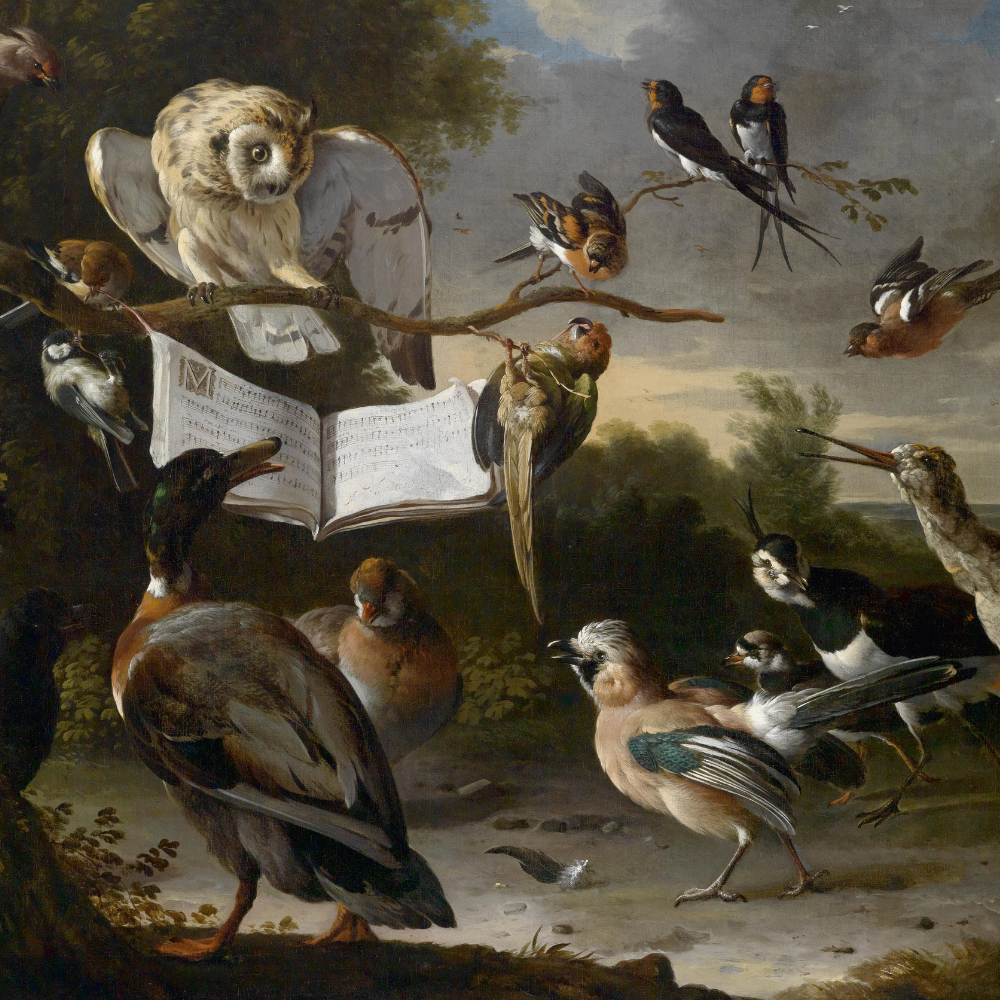
This time we're walking on the wild side, bringing you baroque music inspired by the animal kingdom. Along the way, we'll speak to artistic director Deborah Nagy, and you'll also hear from Ladali's cellist and viola da gambist, Rebecca Landell, for the very first time.
The music you'll hear was performed by Lady Lys on two fantastic programs from fall 2025, the Aesop Project and Wild Things.
The musicians featured on these recordings are Elena Mullins Bailey, soprano Deborah Nagy, oboe and recorder Shelby Yammon, violin Rebecca Landell, cello, and Mark Edwards on harpsichord.
In addition to hearing more about this really cool music, we'll also get into something we've never talked about on the podcast, ladalisa's free community programming and education initiatives. Now, this is a major and growing part of what we do, and I'm so excited to tell you more.
[00:01:04] Speaker B: First, though, let's hear some music.
[00:01:06] Speaker A: We will kick things off with excerpts from Heinrich Bieber's fearlessly experimental Sonata Representativa.
So this is the big can you pick out the cuckoo frog, hen, rooster, quail and cat? On the other side of the music, we'll hear some background on the program from Deborah Nagy.
[00:05:31] Speaker B: Well, Deborah, it's great to talk to you today.
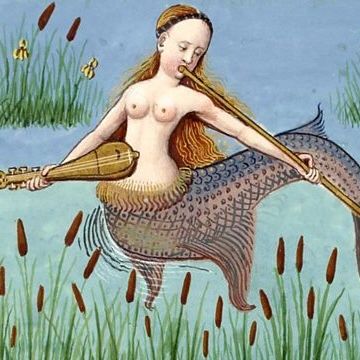
Today we're walking on the wild side. We're talking about Baroque music inspired by the natural world, which has been kind of something that we've delved into in a few different ways over the past few seasons. So can you tell us in broad strokes about this kind of, I won't say fad, but this sort of interest that a lot of Baroque composers had in imitating animal sounds?
[00:05:59] Speaker C: Well, I think it has a few different origins.
One thing or one idea about the imitation of animal sounds through kind of art music, if you will, is that there were various theories and philosophies that music itself had its origins in, in, say, birdsong.
And so everything that we're doing in making music is a kind of a natural extension imitation of that phenomenon, if you will. The other thing that I think is going on, particularly for Baroque composers and some of the composers that we're going to hear, like Bieber, for instance, Heinrich Bieber, is that especially in the 17th century there was, and of course into the 18th century with things like the French encyclopedia, there was a great desire to collect and to understand and to begin to categorize the natural world. And in the 17th century we see this in kind of collections of plants and animals and cabinets of curiosity. And it's an interesting fact, I think also that the first kind of establishment that we would recognize as a zoo has its origins at the court of Louis xiv.
[00:07:30] Speaker B: So, Deborah, in our conversation about the Bieber Sonata, you mentioned a few times like, oh, even a kid would. Would say, this is what this sounds like, right?
[00:07:41] Speaker D: The cow goes blue.
[00:07:43] Speaker B: And that kind of speaks to a little bit about what this program was originally conceived for, which was for educational programming to be performed for kids and families in this really as part of this really big, beautiful project called the Aesop Project.
And as part of that, you incorporated some of these musical settings for Aesop's Fables. Can you tell us a little bit about the background behind these fable settings that you have kind of initiated?
[00:08:14] Speaker C: Sure. These Aesop fables were originally kind of integrated into our baroque pastiche Puppet Opera from 2022 called the White Cat.
And to go a little bit deeper, really what they were are French settings, poetic settings of Aesop's Fables that were set to or adapted to French popular songs.
And these were songs that would have been known in late 17th, early 18th century France. And these were published around 1730.
And they were published, I think, under the imprint or with the kind of composer credit of Clerambault, Louis Nicolas Clerimbaud. Now Clerambaut is a composer in his own right, I think. Think he just kind of put these pieces together and added very simple baselines. There's totally for kind of amateur. It's not serious music. It's totally for kind of moral entertainment in the home. And so we have Clarembau credited adapting these popular songs with baselines and these French poetic settings of Aesop's Fables. So in order to make these more accessible and to use them within the context of the White Cat, I had turned to Larry Rosenwald, who's a wonderful now emeritus professor of English at Wellesley College and great translator and. And writes in all kinds of styles.
And Larry made fantastic rhyming translations into English that I think work really beautifully and fit the music absolutely perfectly. So the English text that you'll hear is by Larry, and it's basically a rhyming translation of the French.
And from there we kind of adapted. Made instrumental intros and outros. And so it really is taking something that was very simple and meant for the home, never meant for a concert, let's say, and bringing it back to life in the 21st century in a way that is both accessible and entertaining.
[00:10:39] Speaker B: And then, of course, this wonderful project, the White Cat, which also featured beautiful puppets by Ian Petroni, we were able to kind of get the band back together, as it were. A lot of the same collaborators came back for this recent project, which was just in November of this year for the Aesop Project, which had these fables, plus new narration by Dave Lucas, who's a poet that we work with a lot and more puppets with. Ian, can you tell us a little bit about the Aesop Project and those performances that we did?
[00:11:20] Speaker C: Absolutely. The Aesop Project was so fun to put together. You already named a bunch of our collaborators.
I think the main difference between the White Cat and the Aesop Project was that Dave Lucas, the poet, as you said, created this frame narrative for us, and that was really a loose adaptation of. The Brementown Musician is actually a famous fairy tale by the Grimm Brothers that has at its center four animal protagonists.
A donkey, a dog, a cat, and a bird. In the original fairy tale, it is a rooster, and in our adaptation, it happened to be a songbird. That worked just a little bit better. So.
And the idea was that they were on a pilgrimage, much in the way that they are in the brain musicians, and. And that became the conceit or the structure in which they would tell each other animal stories. So animals telling animal stories and. And trying to, you know, understand their world and. And learn from their experiences and the experiences of others. So like all fables, there's a moral at the end and. And hopefully harmony. So it was a great context. It. It meant that we had, you know, a lot of animals, not only the animals and the fables, but also the animals of the Bremen Town Musician kind of frame narrative.
And, yeah, we all had a great time.
[00:12:58] Speaker B: It just strikes me as such a.
An unbelievably kind of creative and intellectual and just a real labor of love went into this, creating something that was ultimately really supposed to be like a free, accessible, family friendly, sort of celebratory project. And, yeah, people loved it. In the end, it was really a big success. So, yeah. Do you remember how many people came to see it?
[00:13:27] Speaker C: Between the performances that we did at schools and the public performances that we did on the weekend, there were well over 1200 people that experienced the Aesop Project within the course of that week. So it was a real thrill.
[00:13:40] Speaker A: Let's listen now to one of those settings of an Aesop fable. First you'll hear a little prelude by Francois Couperin from his Apotheosis of Lully, followed by the Ant and the Grasshopper Arranged by Deborah Nagy with English text by Larry Rosenwald.
[00:15:26] Speaker D: On summer days Grasshopper sings and goes a leaping on summer days and no can see her as she lays not.
[00:15:39] Speaker E: For.
[00:15:43] Speaker D: Gathers a store for millionaires giving on the summer days.
On winter days Grasshopper has no food for eating on winter days on barren fields she goes to graze in her neighborhood in west of Lord and calls out who she is could have baby bird on winter days.
[00:17:06] Speaker A: Thanks for listening to this episode of Salon Era, which features excerpts from a live performance by Les Delys from autumn 2025.
[00:17:13] Speaker B: In a moment, I'm so excited to.
[00:17:15] Speaker A: Introduce you to Rebecca Landell, but first, I hope you'll consider making a tax deductible gift to Solaniera. With your support, we can continue to collaborate with engaging guests from across the country and around the world.
You can support us by subscribing to this podcast and by
[email protected] your donations make every episode possible.
[00:17:34] Speaker B: Thanks again.
Okay, Ladylies fans, I am so happy to be talking to Rebecca Landell, who reminded me that despite being a core member with Ladyli since 2020, this is somehow her first time on our podcast. So welcome Rebecca.
[00:17:50] Speaker E: Thank you. Great being here.
[00:17:52] Speaker B: Yeah, of course. Your beautiful playing has been featured many, many times, but we're really happy to talk to you.
Not only are you a fantastic cellist and viola de gambist, but you also are a really accomplished teacher.
So can you tell us a little bit about that side of your career?
[00:18:11] Speaker E: Yeah. Teaching is kind of what I feel is at the heart of my performing career as well.
I feel that what I'm doing behind the instrument is creating opportunities for people to consider themselves and others with a flexible mindset.
So the fact that I get to play music from lots of different periods on different instruments, it makes me more flexible as a person, but it also encourages people who are listening to me or who I'm teaching to think of art and sound and expressive emotion from all sorts of different angles.
So, as an educator at Oberlin, even though my title is Teaching Baroque Cello and Viola da Gamba, a lot of the course offerings are directed toward people who might just be playing a modern instrument and want to learn more about a different facet of playing, like accompanimental playing. Or, you know, maybe they want to learn about playing baroque music on a modern instrument, or they're modern players who want to learn orchestral music. And so we're teaching them the instruments and the music at the same time.
So a lot of this is like thinking about how Can I create opportunities and environments for people to explore their expressive voice and also give them opportunities to feel safe, to really try something new and hear themselves sounding different or expressing an emotion with a new technique that they've never tried before?
I'll sometimes have modern players come to me with their Bach for their graduate school auditions, for example, and they'll say, tell me how to play Bach. And they want me to just give them a set of rules for how to play the suite.
So taking them from that mindset of like, fix my Bach, there's one way to do it, you know, to how do I have a mindset where I can imagine playing this music with totally new rules?
So if I'm going to express longing in Divorce Archello Concerto, I'm going to use a different set of techniques than to express longing in my Bach.
So instead of using lots of vibrato, for example, I might use slow crescendo over the harmonic progression toward the goal. And so those kind of ideas of like, what could I sound like and how might I express this emotion is so much fun for me because emotions are like. Emotions are the thing that we all have in common across all periods of history and all cultures.
[00:20:40] Speaker B: I love that.
[00:20:41] Speaker A: Yeah.
[00:20:41] Speaker B: And like the rules opening up a new kind of palette rather than being sort of right, wrong. So you work with college students at Oberlin, but with Les Delys, you mostly work with high school age kids or like middle school. High school is kind of where we've been focusing on our educational side of things.
And I was wondering if you could tell us a little bit about your work with students through Ladalise and what that's kind of thrown up for you and how it's challenged you or excited you in the past few years.
[00:21:15] Speaker C: Yeah.
[00:21:15] Speaker E: So Deborah and I started talking about educational programming back in 2020 when our sort of free show wing of Les Delices was ended because of COVID And we started putting together these videos to go out to schools with these scripts and musicians, and they were terrible. I mean, they really didn't work at all. There was way too much information and it was a really good idea. But, yeah, we didn't quite know how we were executing it. But the fruit of that conversation and those scripts that we wrote is that I think we came to the conclusion that education, we wanted it to be, you know, obviously free, but we also wanted to have opportunities to continue having a relationship with the same students instead of just coming into a middle school talking about something and then you never see us again.
We wanted Students to be able to put their hands on their own instruments and experiment. Right. Try it.
And then I think those educational programs, those sort of one and done programs, they also morphed. They became a lot more, I guess, tailored or specific.
Instead of trying to give too much information in those shows, we especially, I think Deborah's really changed the way that she programs so that it's more like a core concept or a really clear way to get into the music. Right. That sort of invitational environment.
[00:22:42] Speaker B: This is the thing. It's like so much of our work in this kind of space. You have to have a bad idea before you get to like this, the heart of it. That's good. You know, you have to allow yourself to fail. You have to have these brainstorming things. And I do think that's one of Deborah's incredible strengths, is that she will really stick with the process of getting to a good idea rather than like holding on to her first idea too strongly.
Like she's really best idea wins. And like, let's get there together sort of way of working, I think is absolutely. Yeah.
[00:23:21] Speaker E: It boiled down to, I think, the values that.
That we hold cumulatively in Les Delice about education, that it is thoughtful, that it's well rounded from multiple perspectives within a culture or historical context.
[00:23:38] Speaker B: And now, you know, several years later, Les Delices has an education fund that we are getting a lot of interest in from donors and supporters. We are in area schools developing these relationships with school orchestras. And we also have started doing these full day strings workshops. And we've done two so far, and the third one is actually coming up in February. Can you tell people a little bit about these. These baroque string workshops for young musicians?
[00:24:11] Speaker E: Yeah, so they're usually about six hours long. And you start in the morning with a general, you know, what is early music? What is historical perspective? What are we doing here?
And the students have been predominantly high school students with some middle schoolers, and occasionally there's an adult.
But it's really open to people who are curious, who can play.
And we put together an orchestra and we have a theme. So like the first one we did.
How do you have a improvisatory mindset toward theme and variations? What is the theme and variations? And how do you unpack that?
[00:24:50] Speaker B: Because the students get to use baroque bows sometimes for the first time.
[00:24:53] Speaker E: Yeah, right. We have a nice collection of baroque bows that we've been able to use.
So we're talking with the tool in hand and learning how to craft those sounds.
And then there's Some breakaway sessions. So we have a little more one on one time because playing upper lines and lower lines have their own sort of specific things to think about. And then at the end of the day we put everybody back together and we actually have a little concert.
And it's a little bit of a between, you know, the in between world where it's not a continuing relationship with a school and it's not a one and done.
It is a single day event and some people only come once and we don't see them again. But it's many hours. So they're really getting an intensive taste of what it is that we are doing.
And what's also nice is we've done them in tandem with a Ladalys concert project. So then the students are invited to come and hear us play.
[00:25:42] Speaker B: So in addition to these educational things that are really for young musicians, Ladalise has also started doing more and more free community concerts, which I'm really excited about.
It's allowed us to go into different spaces, different venues for us and also to challenge how do we make a program that is really fun and accessible for a senior citizen. Down to your four year old daughter, for example, like how do we bridge that together and make a dynamic experience for everyone, including our musicians. Because we're really lucky of course to have musicians who are really dedicated to Lady Lisa's whole mission.
But anyway, of our recent free community outreach programs, the Aesop project was definitely a high watermark. I mean there was like puppets, the most insanely cool puppets. There was an actors and narration and of course live music. I was just wondering if you could like reflect a little bit about that experience in that program and, and how you felt being part of all that.
[00:26:56] Speaker E: For sure. Yeah, you bring up a great point which is that the free concerts are very satisfying for the performers.
The reason I think that is, is is the quality of Deborah's research and programming. She, Deborah creates this incredible score for us which is satisfying music.
Also really reflecting on the baroque and how these, these animals were incorporated. So it's very satisfying from that perspective.
And then you put on top of that that she brings in these incredible collaborators that are just incredible. Ian is amazing puppet maker and also so good with the kids.
[00:27:38] Speaker C: Yeah.
[00:27:39] Speaker E: Unlike any educational programming I think I've done.
It's quite remarkable.
[00:27:45] Speaker A: I hope you enjoyed that interview with Rebecca Landell. And now it's time for another musical setting of an Aesop fable.
Now the lion and the Rat may be less well known than Aesop's other fables. But its moral speaks to the usefulness of all creatures, no matter their size.
On the other side of the music, we'll speak again with Deborah Nagy about John Walsh's 18th century publication, the Bird Fancier's Suite.
[00:28:37] Speaker D: Once a rat, the story goes, lay beneath a lion's toes. The animal king, not seeking to sting, not giving way to anger, Spoke so sweetly to his friend and put him out of danger and bored him out and danger.
Days went by as quick as thought nigh and now a trap was caught. But good hearted rat, when he heard of that his pity was aw rat on the trap and gave a bite and all the thorns were bold and all the chords were broken.
Tiny creatures of we see helping out the powers that be. But also. Tis true these powers must be as kindly as they're able.
Let them not tell me with a spear. That's only true.
That's only true and able.
To.
[00:30:36] Speaker B: All right, Deborah. I am not a recorder player. Despite my best efforts, I was there.
[00:30:43] Speaker C: For some of them.
[00:30:46] Speaker B: That's part of my origin story.
But it's my understanding that if you are a recorder player, you know about the Bird Fanciers Suite. Is that true? No, that's not even true. Okay.
[00:30:59] Speaker C: I would say it's pretty damn obscure.
[00:31:01] Speaker B: It's pretty obscure. All right, Well, I feel a lot better then. So for the. For the sake of everyone, recorder players and not, can you tell us a little bit about the Bird Fancier Suite?
[00:31:10] Speaker C: The Bird Fancier's Delight is a publication from about 1708, and it's the weirdest thing.
Well, that I thought I had heard of. It's a kind of a strange concept.
You know, we said a moment ago that this idea of domesticating the wild through music was something that was sort of appealing. And that kind of encapsulates what this little publication is all about.
Basically, if you are a pet owner, and more specifically a pet bird owner, this. And you play the recorder, this is the book for you. So the idea is that you have this little book of tunes that you can teach to your pet bird and. Or at least play and hope that one day they'll sing them back to you so that the bird fancier is the pet owner. And it's their personal delight with the hope that they're going to teach their bird some of these tunes. And the tunes are labeled theoretically specific to the kind of bird that they're good for.
You know, with the idea being. And it says this in the preface that you.
That the tunes are like that the range is of each one is sort of split specific to that kind of bird.
[00:32:34] Speaker B: So, you know, they're very scientific.
[00:32:36] Speaker C: It's so weird. They're these little tiny melodies that are, you know, for the bullfinch or for the lark or for the thrush or there's one for the parrot, but it's just a single line melody. And what we did to make this a piece that you could perform in a concert was create a suite. And I actually took the single line melody and, and kind of create a little trio sonata out of it. And to be quite honest, also, we played a little game at the beginning of the suite between me and Shelby Yaman, our violinist. You know, she is kind of playing at being the. The pet owner, if you will, the. The sophisticated art music one. And as the recorder player, I'm the bird and.
And initially she's attempting to teach me how to sing. And thankfully I am a pretty quick study and.
But it starts out with this very goofy back and forth where I'm trying to imitate her to the best of my very limited abilities.
And then we, then we move into playing a duet and then it becomes a trio, and then we proceed a few additional dances as a trio. And this bird has not only been taught to sing along, but to lead as well.
[00:34:06] Speaker B: Beautiful. Well, let's listen.
[00:34:22] Speaker D: Sam.
Sa.
[00:38:30] Speaker C: Tune in on February 16 as Solanira premieres Sounds from the Western Frontier.
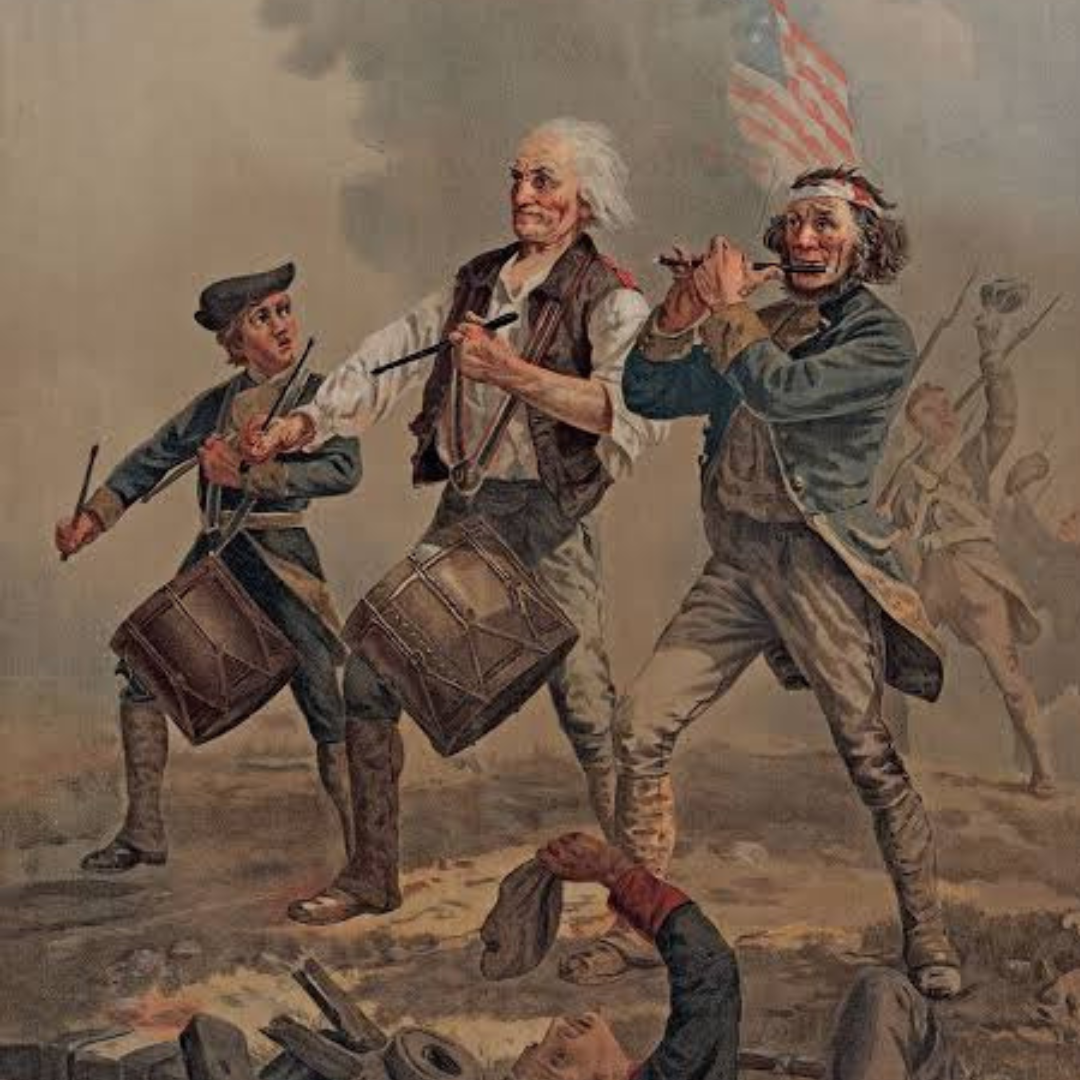
In this episode, guest historian Kim Grunewald and and performer scholar Dominic Giardino consider the music and sounds that reverberated across the Western frontier as French, English, New American settlers and Native Americans pushed westward in the decades following the Revolutionary War.
[00:39:14] Speaker A: I hope you've enjoyed this special look behind the scenes here at Les Delice. While Salon Era is a cornerstone of our free programming, it's just one facet of the community engagement work we do through educational partnerships and programs like the Aesop Project and Wild Things, we are constantly evolving and expanding our approach to outreach. If you believe in this mission, we'd love for you to get involved and especially with our newly launched educational fund.
[00:39:38] Speaker B: So to learn more, you can reach.
[00:39:39] Speaker A: Out to our executive director, Laura Potter, @lauraladalis.org or give us a call at 216-302-8404. We have a full calendar of free events and concerts coming up this spring, so head over to our website to see what's next. But before you go, here's one more Aesop fable for you. This is Tortoise and Eagle after Marin Marais, Amon Malheureux from Aussieon with words by Larry Rosenwald and the music arranged by Deborah Nagy. Performed by Elena Mullins Bailey, Deborah Nagy, Shelby Yamin, Rebecca Landell and Mark Edwards.
[00:40:26] Speaker D: Sam.
On her back perhaps she bore has come to learn how she across the sky before True it is, I tell you, true Resolve my care. Twas our friend the crawling tortoise sought a fly upon the air. True it is, I tell you, truth is all I care Cause our friend the falling tortoise sought to fly upon the air.
Off she went alone and who wandered low and high to learn to fly from master, Evil ruler of the sky. His response was laughter. Then these words came after your goal cannot be found, you must crawl upon the ground.
Tis your destiny and accept the simple way you're meant to be. Crawl ever on and leave the skies to me. True it is, I tell you, truth is all my care. Even now a humble tortoise sought to fly upon the earth.
Weary of debate, be the eagle thou at last these words did state upon my back. Now find no time to wait.
Higher up and high sors the winged fly, Then drops her there alone to let her plummet like the storm.
Here's a tail I seen a reckless fool attempt to go atop a nib, Then bow from high to low, so our story teaches. She who overreaches will never learn to fly, but to the ground will fall and die so our sorry teachers, she who overaches will never learn to climb to the crown of fallen wide.
[00:43:36] Speaker A: Thanks so much for listening to this episode of Salon Era. This episode was created by Executive Producer Deborah Nagy, Associate Producer Shelby Yaman and me, Hannah DePriest, script writer and Special Projects manager.
[00:43:47] Speaker B: For this episode, I spoke with LaGalise.
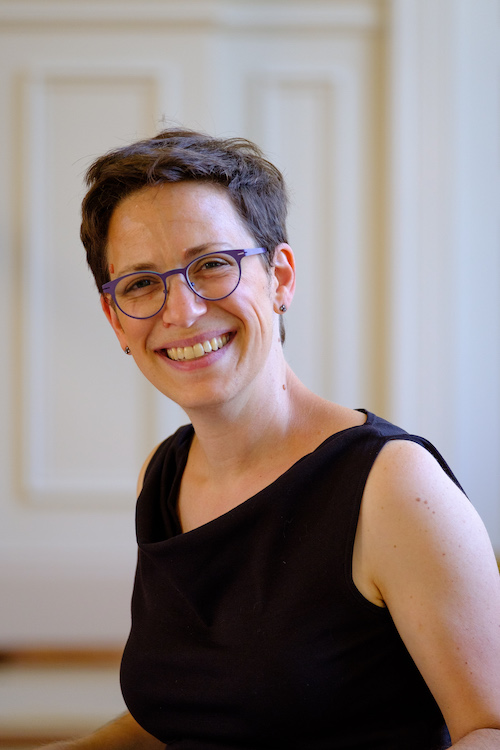
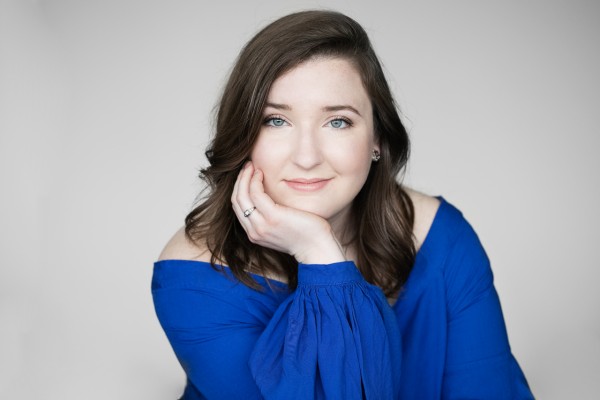
[00:43:49] Speaker A: Founder and artistic director Deborah Nagy and La Dalist, core cellist and Viola de Gambist, Rebecca Landell.
Support for Salon Era is provided by Cuyahoga Arts and Culture, the Ohio Arts Council, and audience members like you.
The music you heard on this program was performed as part of Wild Thing and the Aesop Project.
So we want to give a special thanks to those who made the Aesop Project possible, including the Ohio Arts council through an ArtsNext grant and later Education Fund donors including Tom Buford, Leah Finnan, Tova Klein, in memory of Bob and Nancy Klein, David Porter, Astri Seidenfeld, Daniel and Ruth Shazkis, and John and Doreen Ziska. We are also always very grateful to our Solanier season sponsors, Deborah Malamud, Tom and Marilyn McLaughlin, and Greg Nosen and Brandon Rood.
This episode featured musical performances by Les Delys, recorded live in November 2025. Huge thanks to our audio engineer, Andrew Tripp, for his recording work at our live concerts.
Please subscribe and leave a review on whatever platform you're listening on. It really helps the show from all of us, thanks for listening and have a great day.